Out there among global hubs, Dubai mainland business activities stand out through constant motion and opportunity. A unique position in the marketplace enables this firm to reach customers at home and far beyond, spanning various regions. Operating in the UAE’s mainland means no barriers get in the way of how companies do business. When owners understand how mainland ventures operate here, choices about permits become clearer, rules are easier to follow, and growth is more manageable. How smoothly things run often depends on that early understanding.
1. Dubai Mainland Business Activities List
A long lineup of business options lives under Dubai’s mainland rules, guided by the DET – once called the Department of Economic Development. Each entry gets approval before it shows up on the list. Nearly all corners of the economy are touched in some way. The list accommodates thousands of entries.
- Diverse Industry Scope: The list encompasses a vast array of sectors, ranging from professional consultancies and industrial manufacturing to tourism and hospitality services. This ensures that whether you are running a small expert-led firm or a massive factory, there is a specific category tailored to your operations.
- Unrestricted Geographic Reach: Mainland licensed firms enjoy the unique advantage of operating across the entire UAE without being confined to a specific zone. This freedom allows businesses to open multiple branches and trade directly with the local market in any of the
- Seven Emirates. Adaptive Market Alignment: The activity list is a living document that undergoes periodic refreshes to stay in sync with global and local economic trends. These updates happen seamlessly, integrating new niches like digital innovation or green energy to ensure the legal framework never falls behind.
- Direct Regulatory Integration: Every listed activity is linked to specific government permits and mandatory external approvals from various authorities. Selecting an activity immediately clarifies the legal roadmap, showing exactly which “go-aheads” are needed to stay fully compliant with UAE law.
- Strategic Foundation for Setup: Identifying the correct activity is the mandatory first step that dictates the legal structure and ownership possibilities of your company. While 100% foreign ownership is now the standard for most sectors, Professional Licenses still require a Local Service Agent (LSA). The LSA is a UAE National who handles government liaisons but owns 0% of your equity and has no say in your business operations.
2. Dubai Mainland Business Activities – Popular Activities
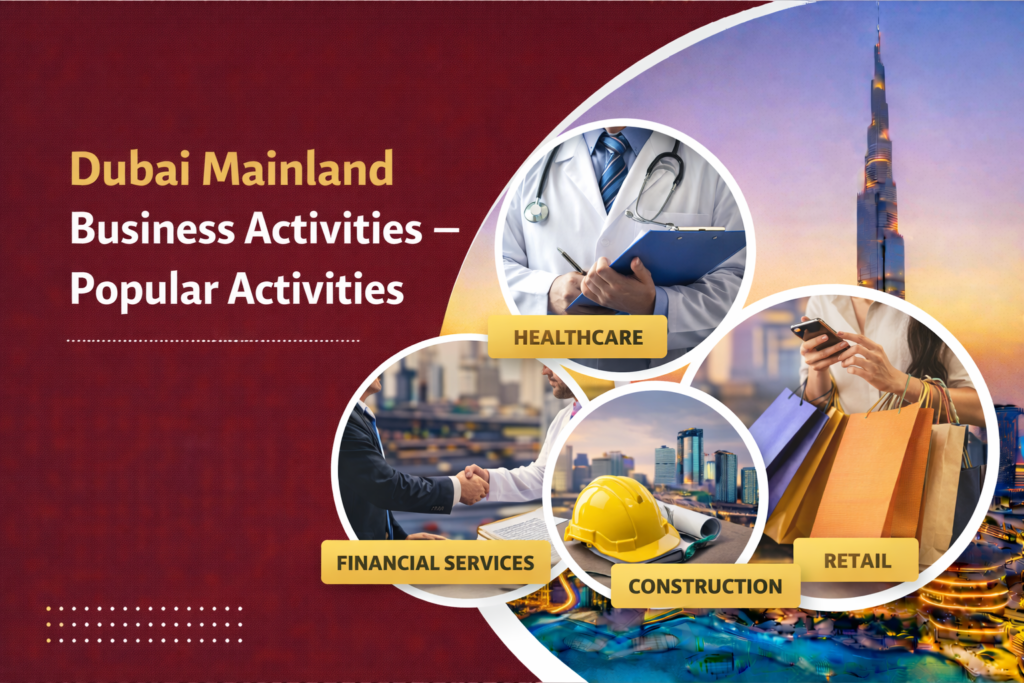
Right now, the marketplace backs a range of onshore operations – mainly due to solid customer interest, room for company expansion, and promising returns. What holds things together is a steady appetite and long-term gain.
- Retail and Wholesale Trading: This category allows businesses to sell goods directly to the local market or in bulk without geographical restrictions across the UAE.
- Management Consultancy: This professional license permits experts to offer specialized advisory services, ranging from business strategy and HR to risk management for local and international firms.
- IT and Software Services: Firms under this activity focus on technical solutions like app development, cybersecurity, and cloud computing to support the region’s digital transformation.
- Digital Marketing and Advertising: This license empowers agencies to manage social media, SEO, and online branding efforts for companies looking to capture a tech-savvy Middle Eastern audience.
- Real Estate Brokerage: Regulated by the Dubai Land Department (DLD), this activity allows firms to mediate property sales, rentals, and management services in one of the world’s most active markets.
- Construction and Contracting: These businesses handle the physical infrastructure of the city, requiring specific technical approvals from the Dubai Municipality for civil works and building projects.
- Restaurants and Cafeterias: This hospitality license covers everything from casual snack shops to fine-dining establishments, governed by strict food safety and hygiene codes from the Food Control Department.
3. Why Start a Business in Dubai on the Mainland?
- No Limits on Market Access – Companies on the Dubai mainland can do business anywhere in Dubai and the UAE without any restrictions on where they can do business.
- Eligibility for Government Contracts – Companies can work directly with the government and other organisations that are not fully government.
- 100% Foreign Ownership – Most activities on the mainland let foreigners own everything without a local partner.
- A lot of different business activities – Mainland licenses cover activities in business, industry, services, and the professional world.
- Scalability and Growth – Long-term growth is possible because it’s easy to expand, there are many visa options, and office needs are flexible.
- Strong Infrastructure – Having access to world-class logistics, transportation, and business facilities makes operations more efficient.
4. Benefits of Mainland Company Formation in Dubai
- Total Market Access: Mainland companies can trade directly with any business or consumer across all seven Emirates without geographical restrictions.
- National Expansion Freedom: Registration on the mainland removes the location-based barriers typically found in free zones, allowing for nationwide operations.
- Government Tender Eligibility: Mainland firms are officially permitted to bid for lucrative public sector projects and government procurement contracts.
- Activity Bundling Flexibility:A single trade license can incorporate multiple related business activities if they align logically with your operational model.
- Unrestricted Office Location: Entrepreneurs have the freedom to lease or purchase office space in any commercial area across Dubai that suits their specific needs.
- Scalable Visa Quotas: The number of employee visas you can secure is flexible and scales directly with the physical size of your office workspace.
- Seamless Business Growth: Mainland structures allow for faster scaling by making it easy to open new branches across the UAE soil without administrative delays.
- Global and Regional Credibility: A mainland license carries significant weight, acting as a powerful gateway to trade with nearby countries and international markets.
5. Requirements for Dubai Mainland Business Activities
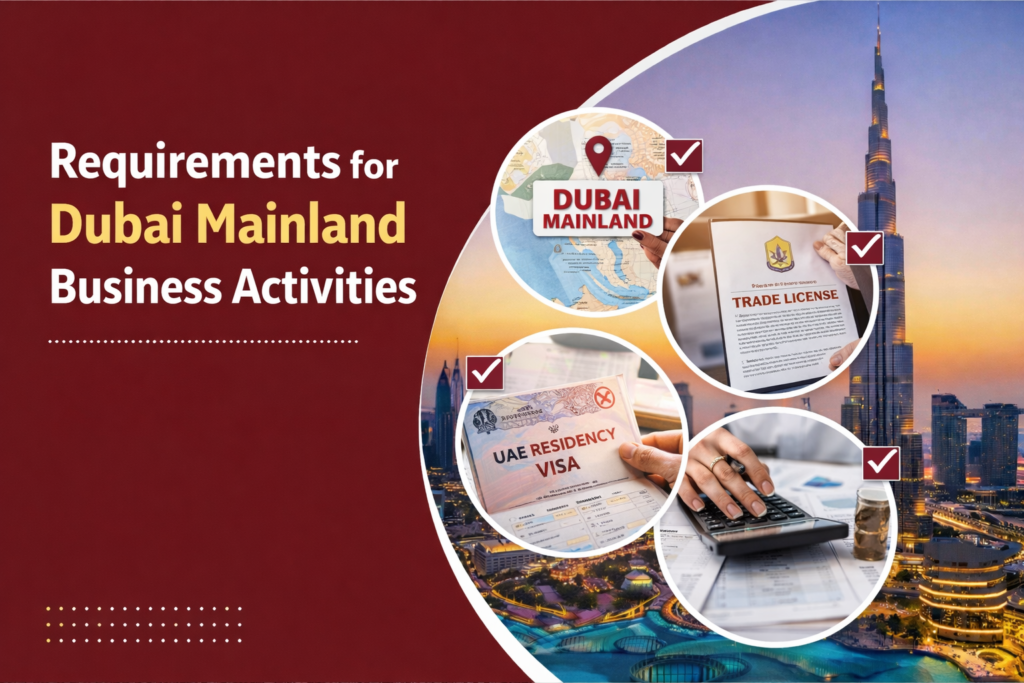
Fulfilling rules comes first – each task on land follows its own set of required steps. These aren’t suggestions; they’re fixed conditions tied directly to the work being done.
Common Requirements
- Selection of approved activity code
- Trade name approval
- Initial approval certificate
- Office or shop lease agreement
- Folks outside the organization must sign off on tasks that follow strict rules.
Finding out what you need to operate legally on Dubai’s mainland helps everything move without holdups. Starting right means skipping slowdowns later.TAP Fiscal helps map your business idea to the correct activity code and approvals from day one.
6. Legal Structures and Trade Licenses on the Mainland
To establish a successful business in Dubai, entrepreneurs must align their qualifications and ownership goals with the correct legal framework and license type. While professional licenses allow for full ownership based on expertise, other sectors like trading or manufacturing require specific commercial or industrial permits.
- Limited Liability Company (LLC): The most common structure for commercial and industrial activities, allowing 100% foreign ownership for most permitted activities and limiting liability to capital contributions.
- Sole establishment / civil company: Suited to professional service providers; ownership can be 100% foreign for most services but may require a Local Service Agent with no ownership rights in some sectors.
- Branch of foreign or local company: Allows a parent company to operate the same activities in Dubai mainland, subject to parent documents and relevant approvals.
Choosing the right combination of structure and activity is one of the key areas where TAPfiscal can advise, especially when you want to balance control, liability, and future expansion.
License categories.
Professional Service Licensing
These permits allow experts to own 100% of their business by verifying academic degrees and professional experience in fields like consultancy, law, or design.
Specialized Regulatory Approvals
Beyond standard registration, certain high-impact sectors must obtain specific “go-aheads” from bodies like the Dubai Health Authority or the Central Bank to ensure public safety.
Simplified DET Acquisition
The setup process is streamlined into three primary steps: selecting a compatible activity, completing company registration, and receiving the final license to begin operations.
Commercial Trade Permits
A mandatory requirement for any business buying or selling physical goods, this license covers everything from international import-export to local real estate and logistics.
Industrial Manufacturing Licenses
Reserved for businesses involved in production and packaging, this category requires a physical office or warehouse to be established within the UAE.
Professional Ownership Structure
While offering full equity to the investor, this service-oriented licence involves a local service agent to facilitate administrative dealings with government departments.
7. Specialized Business Activities: Licensing and Approvals
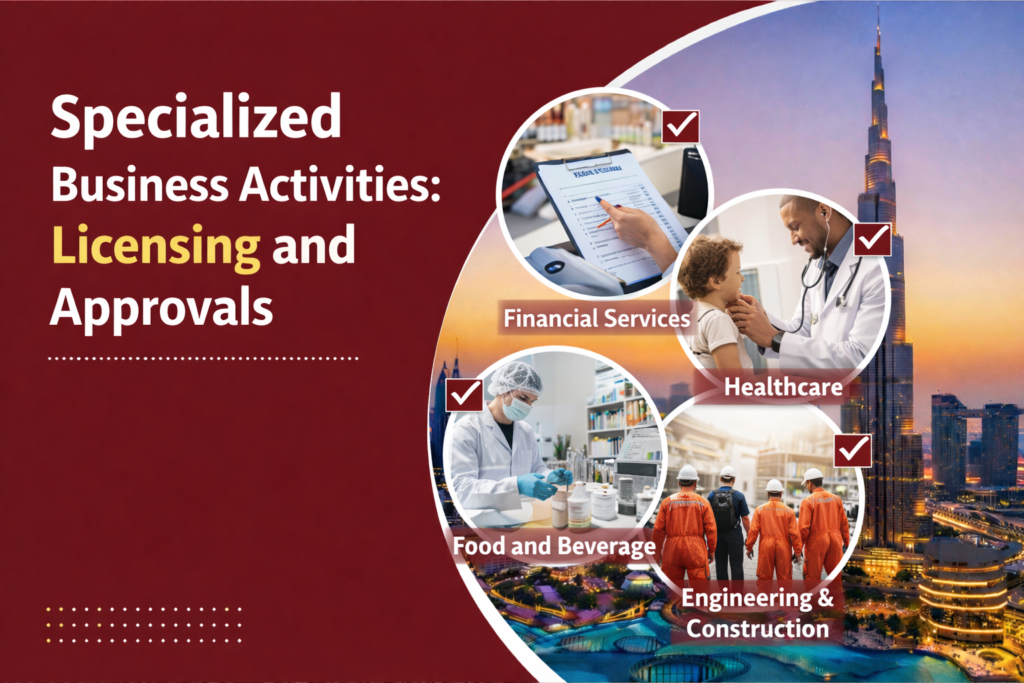
Healthcare Services: Ventures like clinics and hospitals require mandatory clinical and facility approval from the Dubai Health Authority (DHA).
- Educational Institutions: Schools, nurseries, and training centers must have their curriculum and premises vetted by the Knowledge and Human Development Authority (KHDA).
- Legal Consultancy: Law firms must register their practitioners and secure a practice permit from the Government of Dubai Legal Affairs Department.
- Financial Services: Any institution handling money or credit must be authorized by the Central Bank of the UAE to ensure fiscal compliance.
- Insurance and Investment Advisory: Firms offering risk protection or wealth management need specific licensing from the Central Bank or the Securities and Commodities Authority (SCA).
Requirements for Specialized Permits
- Academic Credentials: Business owners or managers must provide legalized and attested degrees relevant to the specialized field.
- Professional Experience: Proof of several years of verified work history in the sector is often required to lead the firm.
- Technical Exams: In fields like medicine or engineering, individual professionals may need to pass specific UAE competency tests.
- Operational Sign-off: Final permits are only issued after the relevant industry overseer conducts a physical inspection of the workspace or facility.
Because these sectors involve more approvals, they usually take longer and cost more to license, which is exactly where TAP Fiscal can save time and reduce errors
8. DET License Acquisition
Licensing for businesses on the mainland falls under the Department of Economy and Tourism. Their role shapes how companies get approved.
Steps in DET License Acquisition
- Choose a business activity.
- Reserve trade name
- Obtain initial approval
- Draft and sign the Memorandum of Association or Local Service Agent agreement, depending on the chosen structure
- Secure a valid tenancy contract and Ejari for your office or shop, as physical premises are mandatory for most mainland licenses
- Submit documents
- Pay government fees and receive a business license
A company on the mainland stays in line because DET keeps things clear and above board. Rules are followed without fuss when oversight is built into the process. Staying compliant becomes routine when the steps are handled systematically by TAP Fiscal. 8. Types of Licenses in Dubai
To establish a footprint in the UAE, choosing the appropriate trade permit is the most significant decision an entrepreneur will make. In Dubai, these permits are broadly categorized into three distinct types—Commercial, Industrial, and Professional—each governing how a company interacts with the market and its physical environment.
1. Commercial Permits: The Gateway to Trade
A Commercial License is the primary requirement for any entity focused on the exchange of goods. This permit is designed for high-volume activities where profit is generated through the movement of physical products rather than specialized labor.
- Operational Scope: It covers a vast range of activities, including general trading, retail shops, logistics, real estate brokerage, and import-export operations.
- Market Reach: Holders can distribute their products both within the local UAE market and to international trade partners.
- Legal Advantage: This structure often allows for a “General Trading” option, which permits a single company to deal in multiple, unrelated goods under one umbrella.
2. Industrial Permits: Foundations for Manufacturing
The Industrial License is reserved for businesses that transform raw materials or semi-finished parts into new products. Because these activities involve large-scale production, they are subject to more rigorous checks regarding safety and environmental impact.
- Production Focus: This includes manufacturing textiles, food processing, assembling electronics, and packaging finished goods for distribution.
- Infrastructure Requirement: A physical factory or dedicated warehouse within the UAE is a mandatory prerequisite for this license to ensure proper oversight of production standards.
- Strategic Growth: Licensed manufacturers often qualify for government-backed industrial incentives, such as subsidized land or exemptions on raw material customs duties.
3. Professional Permits: Licensing for Expertise
For service-oriented entrepreneurs, the Professional License focuses on specialized skills and intellectual output. This category is unique because it centers on the individual’s qualifications rather than the sale of tangible products.
- Intellectual Services: It is the standard permit for consultancy firms, law practices, creative design studios, and auditing or accounting companies.
- Ownership & Agency: While this license allows the investor to retain 100% equity in the firm, it typically requires the appointment of a local service agent to act as a liaison with government departments.
- Credential Based: Applicants must often provide attested educational degrees or professional certifications to prove they are qualified to offer the services listed on their license.
9. Dubai Mainland Activity List for 2026
Operating in Dubai’s mainland during 2026 offers unparalleled access to both local and international markets. Under the regulatory oversight of the Department of Economy and Tourism (DET), businesses can now benefit from 100% foreign ownership in most sectors while enjoying a tax-friendly environment.
Here is the essential licensing roadmap for 2026, including the high-priority sectors fast-tracked under the D33 Agenda:
1. Professional and Consultancy Services
This category is designed for individuals or firms that provide expert-led services. It centers on intellectual output rather than physical goods.
- Target Sectors: Includes event coordination, engineering design, human resources, and legal or investment advisory.
- Key Advantage: Allows for 100% foreign equity, typically involving a local service agent to handle administrative government liaisons.
2. Tourism and Hospitality Permits
As the city cements its status as a global travel destination, these permits are vital for any business interacting with international visitors.
- Operational Scope: Mandatory for organizers of desert excursions, landmark tours, and operators within major theme parks or attractions.
- Compliance: Often requires additional vetting from tourism regulators to ensure service quality and safety standards.
3. Retail and Consumer Trade
Ideal for entrepreneurs looking to sell products directly to the local population, whether through physical storefronts or online platforms.
- Operational Scope: Covers everything from boutique clothing shops to large-scale supermarkets and specialized electronics trading.
- Market Reach: Provides the freedom to trade across all neighborhoods and shopping districts without geographical boundaries.
4. Healthcare and Medical Institutions
Given the high standards of the local health sector, these licenses are subject to rigorous due diligence to protect public wellbeing.
- Approval Pipeline: Beyond the standard trade permit, businesses must secure “No Objection” certificates from relevant health authorities like the DHA or the Ministry of Health.
- Facility Focus: Applies to private clinics, specialized hospitals, pharmacies, and diagnostic laboratories.
5. Logistics, Cargo, and Transport
With its world-class ports and infrastructure, the region is a global leader in the movement of goods.
- Industry Breadth: Includes freight forwarding, heavy truck transport, courier services, and sea freight management.
- Strategic Integration: These licenses enable firms to act as the vital link between the UAE’s busy ports and the mainland’s local distribution networks.
6. Academic and Private Education
The region welcomes private investment in the educational sector to support its growing and diverse population.
- Institution Types: Required for establishing primary schools, language centers, universities, and specialized vocational training institutes.
- Regulator Oversight: Success in this sector requires close coordination with the Knowledge and Human Development Authority (KHDA) for curriculum and facility sign-offs.
7. Innovation and Technology
As the city pushes toward a digital-first economy, these licenses cater to the cutting edge of software and hardware development.
- Technical Niches: Includes cybersecurity consultancy,, cloud service provision, web development and IT infrastructure management.
- Ecosystem Access: While available on the mainland, these firms often benefit from operating in specialized technology clusters that provide networking and infrastructure support.
8. Media and Creative Production
Designed for the creative economy, this license supports the growth of content creation and marketing in the digital age.
- Core Activities: Covers advertising agencies, digital content production, broadcasting, and traditional print media.
- Regulatory Focus: Ensures that media output aligns with local cultural standards while providing a platform for global creative expression.
Strategic D33 Growth Sectors (Priority Licensing)
- Green & Sustainable Ventures:
Ideal for firms specializing in carbon footprint reduction, solar energy, and eco-friendly product manufacturing.
Benefit: Aligned with the UAE Net Zero 2050 goal, these firms receive prioritized processing and potential incentives for sustainable industrial setups.
- Artificial Intelligence & Future Tech:
Dedicated to companies building neural networks, AI ethics auditing, and autonomous system software.
Benefit: Part of the Dubai Universal Blueprint for AI, these firms can apply for the Dubai Unified License (DUL), streamlining their path to banking and government contracts.
10. Business Activities List in Dubai
A wide range of operations can be found in Dubai’s official business registry. That selection stands out across nearby areas. This list is not exhaustive; there are over 3,000 activities on the DED / Department of Economy & Tourism (DET) mainland activity list.
- General Trading – Trading multiple product categories under one license.
- E-Commerce – Selling goods or services through online platforms.
- Supermarket Operations – Retail sale of food, beverages, and household items.
- Restaurant & Café – Dine-in and takeaway food service.
- Auto Spare Parts Trading – Selling vehicle parts and accessories.
- Building Materials Trading – Trading construction and building supplies.
- Jewellery Trading – Buying and selling gold, diamonds, and jewellery.
- Real Estate Brokerage – Facilitating property sales and rentals.
- Car Rental – Renting vehicles on a short- or long-term basis.
- Home Appliances Trading – Retail or wholesale of appliances.
- Garments Trading – Selling clothing and fashion items.
- Electronics Trading – Trading consumer electronics and gadgets.
- Real Estate Development – Constructing and developing properties.
- Management Consultancy – Providing business and strategy advice.
- IT Consultancy – Offering technology and software guidance.
- Marketing Consultancy – Marketing strategy and brand support.
- Accounting Services – Bookkeeping, audits, and financial reports.
- Legal Consultancy – Providing legal advice (with approvals).
- Engineering Consultancy – Civil and technical engineering services.
- Interior Design – Designing residential and commercial interiors.
- Graphic Design – Producing visual branding and media designs.
- Web Design – Developing websites and online interfaces.
- Translation Services – Translating documents and content.
- Training Services – Professional learning and skill programs.
- Event Management – Organizing corporate or private events.
- Photography Services – Professional photo and video services.
- Healthcare Consultancy – Advisory in medical operations.
- Tour Operator – Organizing tours and tourism activities.
- Travel Agency – Ticketing and travel arrangements.
- Hotel Management – Managing hospitality operations.
- Yacht Rental – Renting yachts and marine leisure vessels.
- Adventure Tourism – Organizing adventure and outdoor trips.
- Building Contracting – Constructing residential and commercial buildings.
- Steel Contracting – Structural steel building works.
- Prefab Building Contracting – Prefabricated building installation.
- Concrete House Contracting – Concrete-based property construction.
- Road Contracting – Building and maintaining roads.
- Tunnel Contracting – Developing tunnel infrastructure.
- Railway Contracting – Railway project construction.
- Bridge & Dam Contracting – Constructing bridges and dams.
- Power Line Contracting – Installing electrical power lines.
- Power Station Contracting – Building and servicing power plants.
- Communications Tower Contracting – Setting up telecom towers.
- Water Pipeline Contracting – Building water distribution systems.
- Sewage Contracting – Installing sewage and drainage systems.
- Oil & Gas Civil Works – Infrastructure for the oil & gas sector.
- District Cooling Contracting – Installing industrial cooling facilities.
- Chemical Manufacturing – Producing chemical products.
- Plastic Manufacturing – Manufacturing plastic goods.
- Textile Manufacturing – Producing fabrics and textile products.
- Furniture Manufacturing – Making furniture and fixtures.
- Paper Products Manufacturing – Producing paper goods.
- Metal Fabrication – Manufacturing metal structural items.
- Printing & Publishing – Print media and publications.
- Pharmaceutical Manufacturing – Producing medicines and supplements.
- Food Manufacturing – Producing packaged or processed foods.
- Carpet Manufacturing – Making carpets and rugs.
- Lighting Equipment Manufacturing – Producing lighting products.
- Home Appliances Manufacturing – Making household appliances.
- Coating & Insulation Manufacturing – Producing industrial coatings.
- Fish Processing – Canning and freezing fish.
- Jewellery Repair Workshop – Repair and crafting of jewellery.
- Automobile Manufacturing – Producing vehicles and components.
- Motorcycle Manufacturing – Manufacturing motorcycles.
- Cement Products Manufacturing – Making concrete and cement goods.
- Steel Fabrication – Fabricating steel structures.
- Waste Treatment – Waste collection and recycling.
- Water Bottling – Producing bottled drinking water.
- Gym / Health Club – Operating fitness centers.
- Sports Club – Running sports and recreation clubs.
- Cleaning Services – Residential and commercial cleaning.
- Facility Management – Building maintenance and operations.
- Advertising Agency – Providing advertising and media services.
- Broadcasting Services – Broadcasting radio or TV content.
- Cinema Operations – Operating movie theatres.
- Flower Trading – Selling flowers and plants.
- Animal Feed Trading – Trading livestock food products.
- Fuel Trading – Trading petroleum and fuel products.
- Retail Store Operations – Selling consumer goods.
- Financial Services – Non-banking finance activities.
- Insurance Consulting – Advisory on insurance products.
- Government Liaison Services – PRO and document clearing services.
- Labour Supply – Providing manpower for industries.
- Typing & Translation Center – Typing, translation, and PRO services.
- Nursery / Daycare – Childcare and early education.
- Medical Clinic – Outpatient medical services.
- Dental Clinic – Dental care and treatment.
- Medical Laboratory – Diagnostic and lab testing.
- Veterinary Clinic – Animal health services.
- Art Studio – Art creation and training services.
- Cleaning Equipment Trading – Selling cleaning tools and materials.
- Building Maintenance – Repairs and maintenance for buildings.
- Passenger Transport – Transportation of people by vehicles.
- Car Registration Services – Handling registration and vehicle documents.
- Legal Document Services – Notary and document clearing.
- Social Club – Membership-based recreational facility.
- Printing Services – Commercial printing solutions.
- Technical Workshop – Mechanical and electrical repairs.
- Sewage Treatment – Treating and managing wastewater.
- Business Aviation Services – Aviation support and private jet services.
A broad mix of options means investors can pick what fits their knowledge, plus where the market is headed.
11. Trending Dubai Mainland Business Activities
A shift in what people want can quietly reshape how tasks are picked. What shows up in stores today might shape tomorrow’s choices behind the scenes.
High-Demand Activities
- Digital marketing services
- IT consultancy and software development
- E-commerce trading
- Logistics and delivery services
- Business consultancy
- Fitness and wellness centers
Fueled by steady demand, Dubai’s mainland ventures show clear momentum. Growth isn’t slowing down – fresh opportunities keep emerging. Scalability comes naturally here, almost without effort. New paths open simply by staying active in the market. Success often follows those who adapt quickly.
12. Documents Required for Dubai Mainland Business Activities
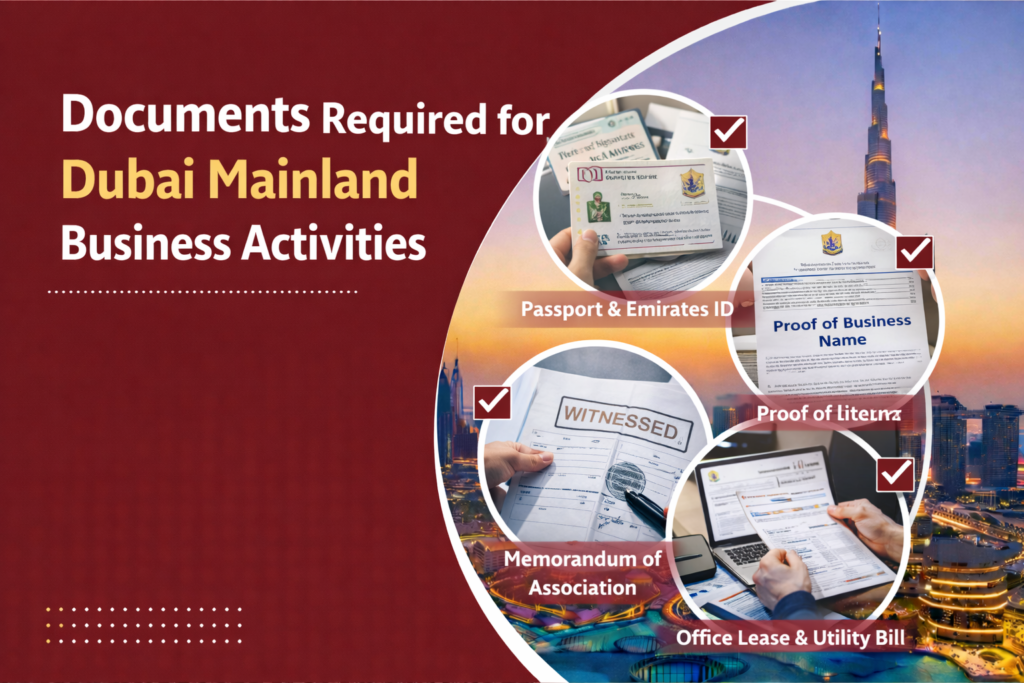
Filing the right paperwork makes it possible to get approved and receive a license.
Documents Required
- Passport copies of shareholders
- Passport-size photographs
- Trade name reservation certificate
- Initial approval certificate
- Tenancy contract and Ejari
- Outside permission papers might be needed sometimes.
Getting clear on what paperwork you need for operating a business in the Dubai mainland makes things go more easily. When the right forms are ready, delays drop off. Each document plays a role – missing one slows everything down. Knowing them ahead of time saves time later, and TAP Fiscal can prepare these in a single, organized file so setups move faster.
13. Adding or Changing Business Activities
Fresh changes can shape what you do after signing up in Dubai. Still, rules must fit each update. Every shift follows local checks without delay.
When You May Need Changes
- Expanding services
- Entering new markets
- Diversifying operations
Fees pile up when activities shift, since permissions must be updated through official channels. Approval comes only after the paperwork gets processed by regulators, and in many cases after new external approvals if the additional activity is regulated.
TAP Fiscal can guide whether it is better to amend your existing license, add new related activities, or create a separate entity, so that growth does not cause unexpected compliance or cost issues.
14. Advantages of Selecting the Right Activity
The way you pick a task shapes how everything runs inside the company.
Key Advantages
- Faster approvals
- Lower compliance risks
- Optimized licensing costs
- Better visa eligibility
- Operational flexibility
Picking with purpose today builds staying power tomorrow.
15. Common Mistakes to Avoid
- Choosing an activity that does not match real operations can lead to inspection issues or license amendments later.
- Mixing unrelated activities under one license when separate licenses or structures are actually required.
- Ignoring external approvals for regulated sectors like health, education, or finance until late in the process.
- Underestimating office and Ejari requirements, which directly affect visa quotas and final license issuance.
- Assuming 100% foreign ownership applies to every activity without checking if it falls into a strategically restricted sector.
TAPfiscal helps avoid these mistakes by reviewing your business model against the official activity list and current regulations before you submit anything.
16. Dubai Mainland vs Free Zone Activities
Finding that difference matters when choices come up.
Mainland
- Mainland activities let you trade across the UAE without limits. Wherever business takes you, operations stay open. Access grows when borders fade. Location does not block opportunity here.
- Governed by DET
- Fits well with consumer markets or public sector deals
Free Zone
- Trading on the mainland isn’t allowed for Free Zone Activities Limited.
- Run through the rules set by zone leaders.
- Fine-tuned for global workflows
17. Long-Term Outlook for Mainland Businesses
Looking ahead, Dubai mainland remains central to companies that want deep access to the UAE’s consumer and government markets, not just international trade.
- Demand for service activities like consultancy, IT, and digital marketing is expected to grow alongside more traditional sectors such as retail and construction.
- As regulations continue to support 100% foreign ownership for most activities, more global entrepreneurs will choose the mainland instead of or alongside free zones, increasing competition and opportunity.
TAP Fiscal can help you position your business activity not just for today’s license, but for the next stage of the market.
18. Business Compliance in 2026
In 2026, setting up a business requires more than just a trade license. To stay legal and avoid heavy fines, every entrepreneur must address these four pillars immediately after receiving their license:
- Corporate Tax Compliance: Under the UAE’s tax framework, registration is mandatory. A 9% rate applies to taxable profits above AED 375,000, while profits below this threshold are taxed at 0% to encourage startup growth.
- MoHRE & Labor Relations: Every mainland firm must register with the Ministry of Human Resources and Emiratisation (MoHRE). This is the only way to legally issue labor contracts and manage employee work permits.
- Mandatory Insurance: You must enroll employees in the Involuntary Loss of Employment (ILOE) scheme. Additionally, health insurance is now a mandatory prerequisite for issuing or renewing any residency permit in Dubai.
- UBO (Ultimate Beneficial Ownership): All companies must maintain a UBO register. You are required to disclose the natural person who ultimately owns or controls 25% or more of the company to the DET to ensure global transparency standards are met.
Conclusion – Why Choose TAP Fiscal?
Selecting your business activity is the most critical decision you will make in your Dubai mainland journey. It dictates your legal structure, your license costs, and your ability to scale across the UAE. In today’s regulatory environment—with new corporate tax requirements and labor laws—accuracy at the start is no longer just a “best practice”; it is a necessity to avoid costly penalties and delays.
At TAP Fiscal, we specialize in turning the complexity of Dubai’s mainland regulations into a streamlined roadmap for your success. Our team doesn’t just process paperwork; we provide strategic guidance on:
- Activity Selection: Ensuring your license perfectly matches your operational goals.
- 2026 Compliance: Seamlessly handling your Corporate Tax registration and MoHRE labor filings.
- Administrative Excellence: Managing UBO registers and LSA agreements so you remain 100% compliant from day one.
Don’t guess what comes next. Let us build your business on a solid legal footing while you focus on growth.
Ready to start your venture? Contact TAP Fiscal today for a free activity-mapping consultation.
Frequently Asked Questions (FAQs)
1. What are the Dubai Mainland business activities?
Dubai Mainland business activities are officially approved operations that companies can conduct under a mainland license issued by the Dubai Department of Economy and Tourism. These activities encompass the commercial, professional, industrial, and tourism sectors, enabling businesses to operate across Dubai and the UAE.
2. How are business activities classified in the Dubai Mainland?
Dubai Mainland business activities are classified into commercial, professional, industrial, tourism, and agricultural categories. Each category includes specific activities defined by local regulations, determining the license type, approvals required, and legal structure of the company.
3. Why is choosing the correct mainland business activity important?
Selecting the correct mainland business activity ensures legal compliance, smooth license approval, and accurate cost estimation. Choosing an incorrect activity can lead to delays, fines, or restrictions on operations, making it essential to align the activity with your actual business operations.
4. Can a Dubai Mainland company have multiple business activities?
Yes, a Dubai Mainland company can have multiple business activities under a single license, provided they fall within compatible categories and are approved by the authorities. Additional activities may increase licensing costs and require further approvals depending on the nature of the business.
5. Are there any restricted or regulated business activities in the Dubai Mainland?
Yes, certain Dubai Mainland business activities are restricted or regulated and require special approvals from external authorities. These typically include legal services, healthcare, education, finance, and insurance-related activities, which must meet additional regulatory requirements.
6. Does a mainland business activity allow trading across the UAE?
Yes, Dubai Mainland business activities allow companies to trade freely across Dubai and the wider UAE. Mainland businesses can work with government entities, local companies, and free zone businesses without geographical restrictions.
7. Can foreign investors own 100% of a mainland business?
Yes, foreign investors can own 100% of most Dubai Mainland businesses without the need for a local sponsor. However, certain strategic or regulated activities may still have specific ownership or approval requirements.
8. How does the business activity affect the mainland license cost?
The selected business activity directly impacts the mainland license cost, as different activities have varying government fees, approval requirements, and compliance obligations. Regulated or industrial activities typically involve higher costs compared to standard commercial or professional activities.
9. Can I change or add business activities after company registration?
Yes, you can change or add business activities after registering a Dubai Mainland company. This requires applying for a license amendment, paying applicable fees, and obtaining any necessary approvals related to the new activity.
10. Where can I check the approved list of Dubai Mainland business activities?
You can check the approved list of Dubai Mainland business activities through the Dubai Department of Economy and Tourism official activity list or by consulting licensed business setup professionals who provide updated regulatory guidance.