
Starting a company in the UAE begins with securing the right Business trade license in Dubai. A trade license is the core legal document that authorizes your commercial, professional, industrial, or online activities and confirms your company’s legal status. Dubai’s business environment is globally recognized for its speed, infrastructure, and investor‑friendly regulations, supported by clear corporate tax and VAT frameworks that every business must now consider. Whether you are launching an online startup, opening a retail shop, or setting up a consultancy, understanding the licensing, tax, and compliance process is essential for long‑term success.
This complete guide explains the key licensing types, costs, and benefits, including business license dubai, trade license dubai, and commercial trade license dubai, along with recent changes in ownership rules, corporate tax, and renewal penalties.
1. Trade License Dubai: A Complete Guide in 2026
A Business trade license in Dubai is the official permit that allows individuals or companies to operate legally in the UAE. Without a valid license, no business activity can be conducted, advertised, or promoted, and operating without one can lead to fines, closure or banking or visa disruptions. The license type depends on your operations—whether you focus on commercial services, professional services, industrial activities, or e-commerce.
Dubai issues licenses through multiple authorities, including mainland and free zone jurisdictions. Investors choose the license type based on business activity, ownership rules, tax treatment, and target market, with many activities now allowing 100% ownership on the mainland and full ownership on all free zones. Obtaining a new trade license in Dubai is now faster than ever.
2. What is a Business License in Dubai?
A business licence in Dubai is a document issued by the government that outlines what your company can and cannot do and under which category it is registered. It serves as proof of your company’s legal status. It is mandatory for every entity, from a small freelance setup to a large general trading licence in Dubai.
The authority that issues your license depends on your location. The Department of Economy and Tourism (DET) handles mainland licenses, while specific free zone authorities manage their own zones and regulate activities within their boundaries. In all cases, a trade license is the foundation for opening a bank account, registering for Corporate tax and VAT where required, and applying for residency visas.
3. Benefits of Obtaining a Trade License in the UAE
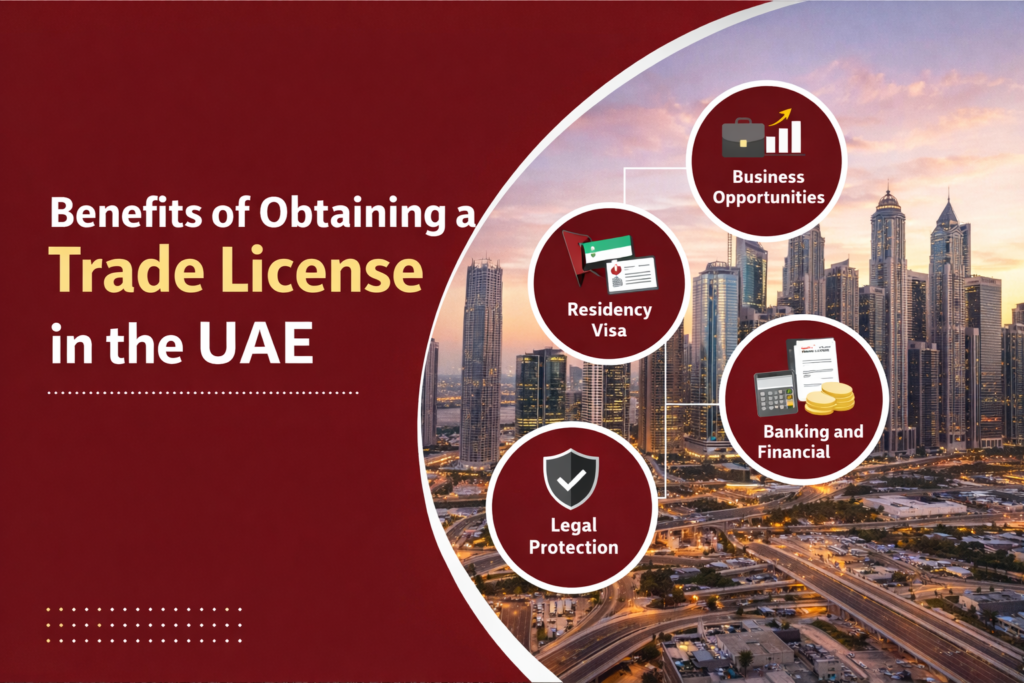
Securing a Business trade license in Dubai offers several strategic advantages:
- Legal Business Operations: Operate with total peace of mind by following government rules, protecting your brand from heavy penalties, and fulfilling UBO (Ultimate Beneficial Owner) requirements to ensure full compliance.
- Global Market Hub: A proper license allows you to conduct both domestic and foreign trade. With world-class logistics and ports, you can reach markets across the Middle East, Africa, and Europe from a single Dubai base.
- Tax Efficiency: While the UAE has introduced corporate tax, a Dubai license,when structured correctly allows you to take advantage of Small Business Relief (for revenues under AED 3 million) or specific Free Zone exemptions.
- Visa and Banking Benefits: A license allows you to obtain residency visas for owners and staff and supports smoother corporate bank account opening by demonstrating your company is officially registered and regulated.
Overall, having the right license and structure from day one makes it easier to grow your business, adapt to future changes in the UAE tax and compliance rules.
4. Types of Business Licenses in Dubai
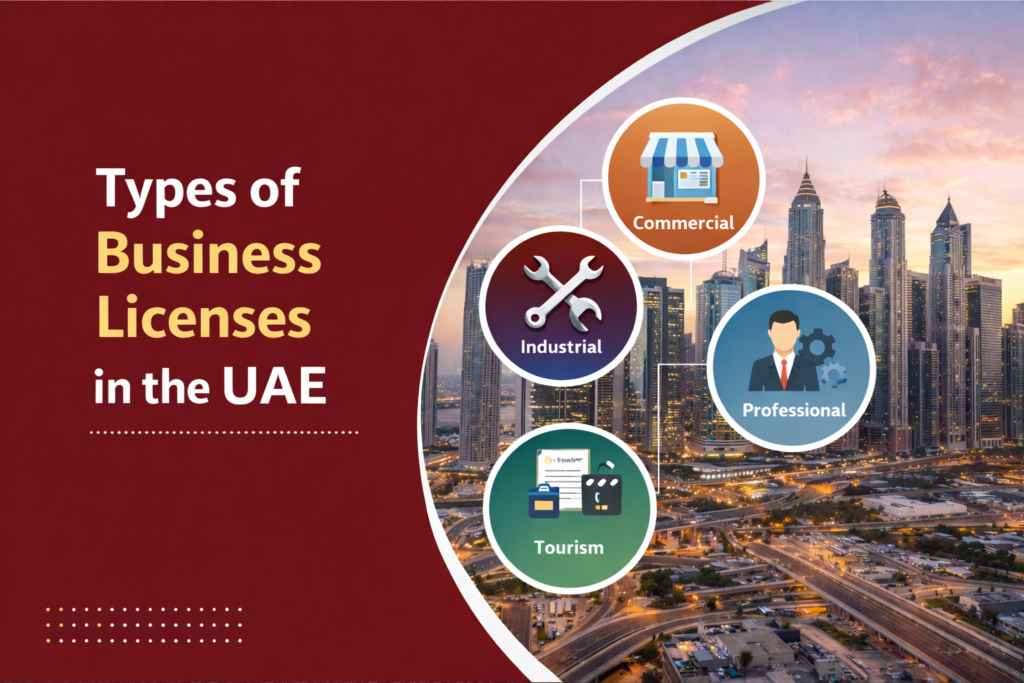
Choosing the right category from the types of business licenses in Dubai is critical for compliance and cost planning.
(A). Commercial Trade License Dubai
A commercial trade license is issued for companies involved in trading, import/export, wholesale and retail activities. It also includes the general trading license in Dubai, which allows dealing in multiple unrelated goods under a single license, usually at a higher fee bracket due to its flexibility.
(B). Professional License in Dubai
A professional license in Dubai is for service-based businesses like consultants, designers, marketing agencies and IT service providers. The professional license cost in Dubai is often more affordable for individual experts or small partnerships and in many cases, it supports 100% foreign ownership on the mainland for eligible activities.
(C). Industrial License
An industrial trade license in Dubai is required for manufacturing or production activities, whether you are operating a factory, packaging facility, or light industrial unit. It often requires additional approvals from environmental, health, and industrial authorities and may have stricter requirements for warehouse space and safety standards.
(D). E-Commerce License
For online selling, you can obtain an online business license in Dubai that permits you to sell via website, apps or marketplaces. Many investors prefer an e-commerce license in Dubai with visa options to run digital shops while living in the UAE. The Dubai e-commerce license cost usually starts from AED 6,000.
5. What is a Free Zone, Offshore, and Mainland License?
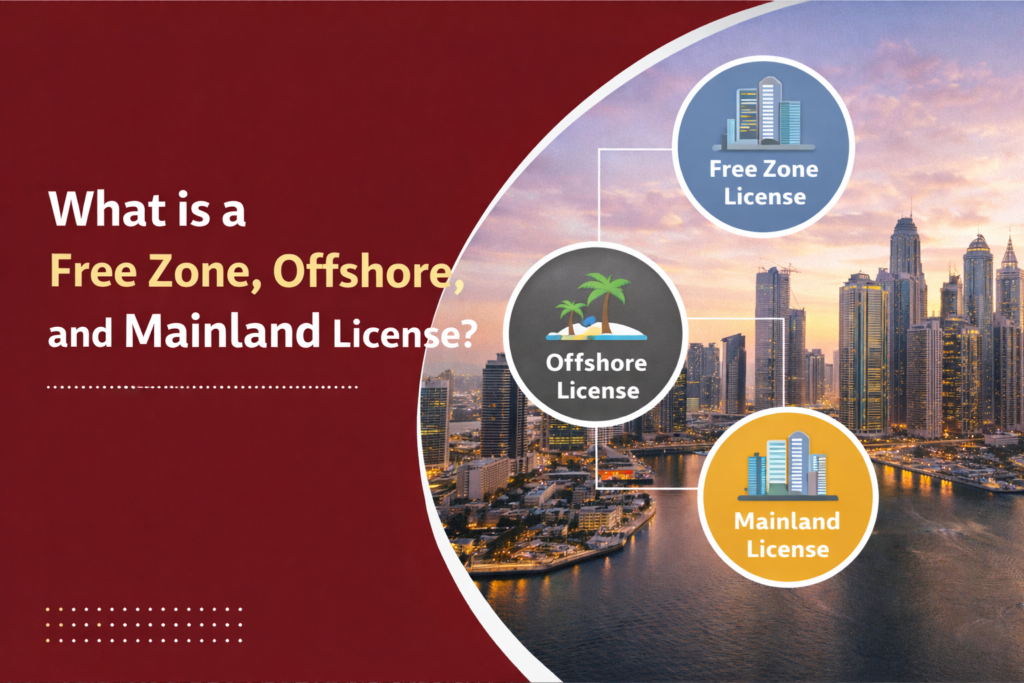
When looking at the Business trade license in Dubai, you must choose a jurisdiction.
- Mainland License Dubai: This allows you to trade anywhere in the UAE and take on government contracts. Many commercial and professional activities now allow 100% foreign ownership on the mainland, though certain strategic sectors may still require local service agents or special approvals. The mainland license in Dubai usually includes a physical office requirement, and you must comply with mainland rules on visas, accounting, and tax.
- Free Zone Trade License Dubai: These are popular for 100% foreign ownership, simplify setup, and focused sector ecosystems (such as media, technology, logistics, or finance) and tax exemptions. The dubai free zone trade license costis often lower for startups using flexi desk or shared office packages, and some freezones offer incentives and tax benefits, such as 0% corporate tax on qualifying freezone income under UAE corporate tax rules. However, freezones are generally restricted to trade in the mainland UAE market without appointing a local distributor or establishing a mainland branch or LLC.
- Offshore License: Offshore entities are used mainly for holding assets, international business, or special purpose vehicles and do not allow you to have a physical office or conduct commercial activities within the UAE market. They cannot trade locally in the UAE or hire staff on standard employment visas in the same way as mainland or free zone entities, but they can be useful for structuring, asset protection, and cross‑border holdings.
| Feature | Mainland License (DED) | Free Zone License | Offshore License (IBC) |
| Market Access | Trade anywhere in the UAE and bid for government contracts. | Trade within the zone and internationally; needs a distributor for UAE mainland. | No local trade allowed; used for holding assets or international business. |
| Ownership | 100% Foreign Ownership allowed for 1,000+ commercial & industrial activities. | 100% Foreign Ownership guaranteed. | 100% Foreign Ownership. |
| Corporate Tax | 9% on taxable income above AED 375,000. | 0% on Qualifying Income (Must still register and file annual returns). | 0% (but not eligible for UAE Tax Residency Certificates). |
| Physical Space | Mandatory physical office with Ejari registration. | Options for Flexi-desks, Virtual Offices, or physical warehouses. | No physical office or residency visas allowed in the UAE. |
6. Documents Required for a Business Trade License in Dubai
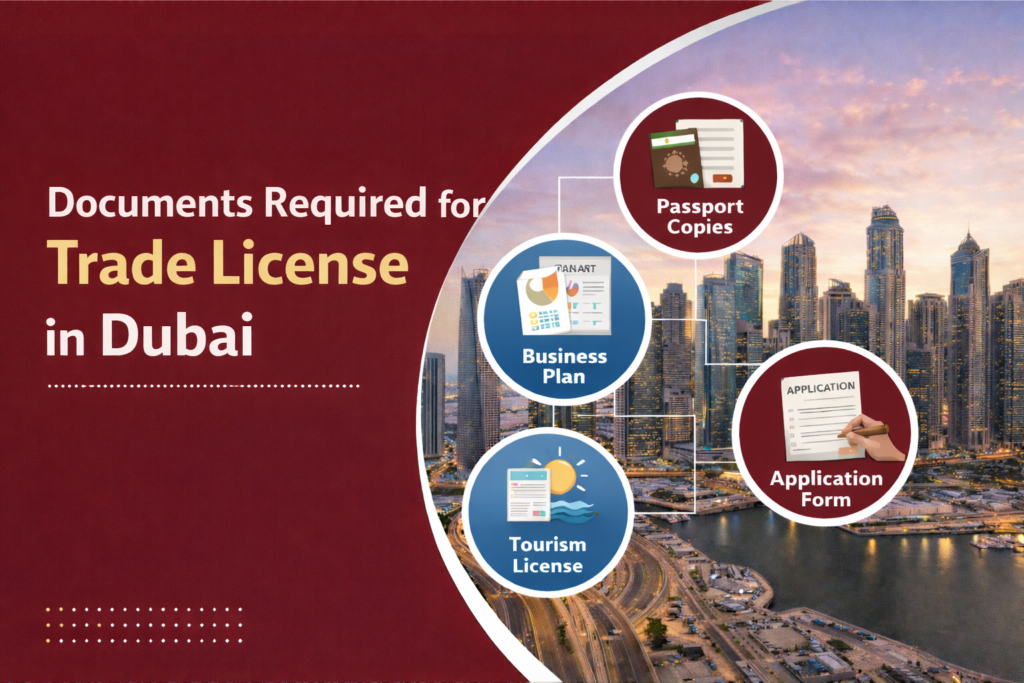
To apply for a company trade license in Dubai, you typically need the following:
- Passport Copies: For all shareholders and partners.
- Visa/Emirates ID: Copies for UAE residents involved in the firm.
- Trade Name Certificate: Proof that your name choice is approved.
- Initial Approval: A certificate showing the government agrees with your plan.
- MOA: The Memorandum of Association defines the ownership.
- Tenancy Contract (Ejari): Proof of a registered office or desk space.
Certain activities may require extra approvals from regulators such as the health authority, education regulators, or transport authorities, especially for regulated professions or sensitive sectors.
7. How to Obtain a Trade License in Dubai
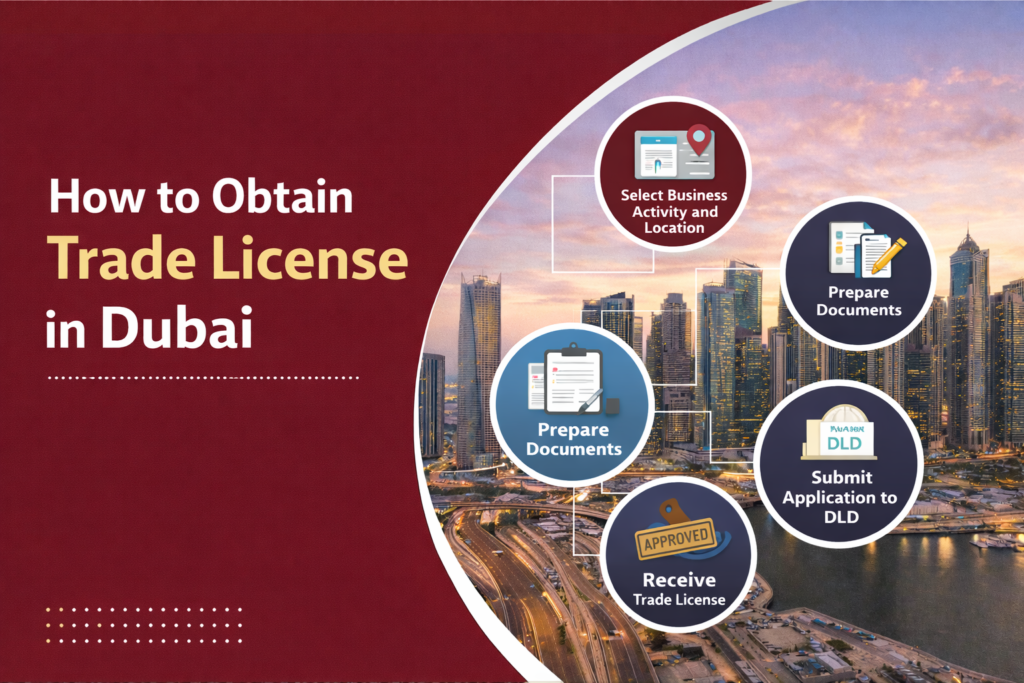
The process to get a Business trade license in Dubai follows these steps:
- Define your specific business activity: Decide exactly what you will do—trading, services, manufacturing, online sales—so you can match the activity to the authority’s approved list.
- Choose jurisdiction and structure: Select mainland, free zone, or offshore and decide on your legal structure (for example, LLC, sole establishment, civil company, or free zone company) based on ownership, visa needs, and tax impact.
- Reserve your trade name: Reserve a unique trade name that complies with local naming rules and obtain the trade name certificate.
- Apply for initial approval: Submit your basic details and activities to get initial approval from the relevant authority.
- Sign the MOA and lease an office or flexi‑desk: Prepare and sign the MOA or service agent agreement and secure your office, warehouse, or flexi‑desk, ensuring Ejari or equivalent documentation is ready.
- Submit all final documents and pay the fees: File all approvals, documents, and forms with the authority, pay the government fees, and complete any additional approvals required.
- Receive your trade license: Once processed, your trade license is issued, enabling the company to begin legal operations and proceed with corporate bank account opening, VAT or corporate tax registration as needed, and visa applications
8. Cost of Trade License in Dubai
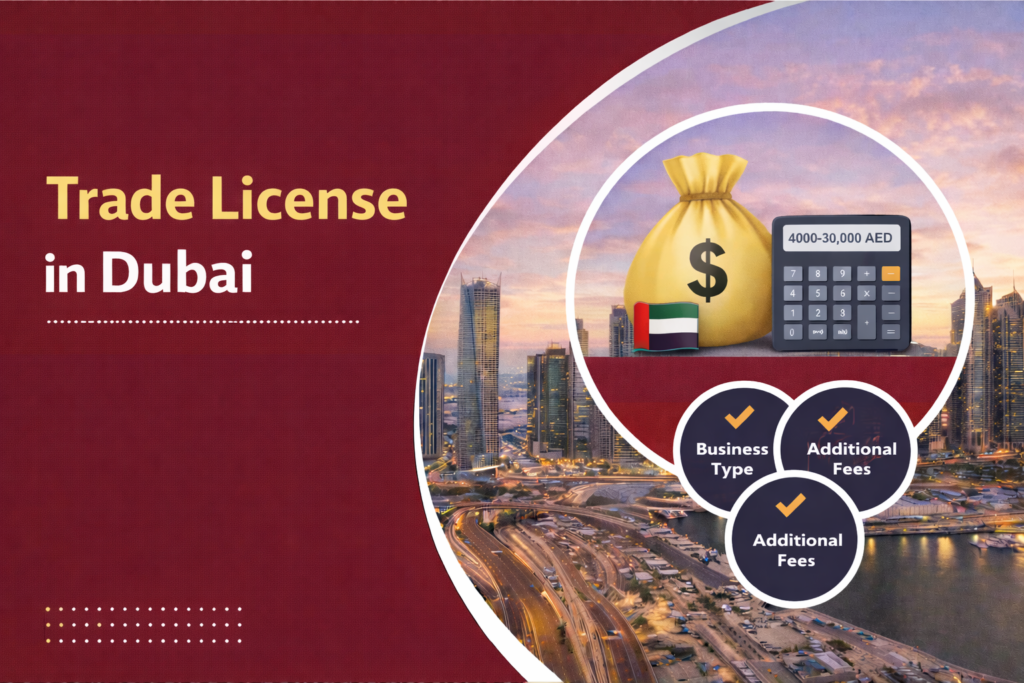
The Dubai trade license cost varies based on your activity, jurisdiction, and visa requirements. As of 2026, here is the breakdown of what to expect:
- Startup & Freelance Options: For digital nomads and solo entrepreneurs, an online business license in Dubai or a small business license cost in dubai can be as low as AED 5,000 to AED 12,000 with entry‑level, no‑visa, or flexi‑desk packages, while other free zones may range higher depending on the number of visas and facilities included.
- Mainland Setup: A standard Commercial trade license in Dubai typically ranges from AED 15,000 to AED 25,000. This excludes office rent but includes mandatory government and municipality fees.
- Industrial & General Trading: These licenses carry higher fees, often exceeding AED 30,000, due to the additional environmental and safety approvals required.
Pro-Tip: Remember that you must also factor in the cost of Corporate Tax registration and potential VAT registration (mandatory if taxable supplies exceed AED 375,000) into your initial year-one budget.
Common costs include:
- Trade name reservation and initial approvals fees.
- License issuance, government fees and municipality fees or authority charges.
- Office rental, flexi‑desk, or co‑working space packages, which are usually mandatory for mainland and many free zones.
- Establishment card issuance, immigration file costs, and visa processing for owners and employees.
These figures are indicative and can change based on the chosen authority, type of package, and any current promotions or regulatory updates, so it is important to obtain an updated quotation before finalizing your setup.
9. How Long Will It Take to Get Approved?
Getting a Business trade license in Dubai usually takes between 3 and 10 working days once all documents are in order, and your tenancy or flexi‑desk agreement is ready. Free zones often provide faster “instant” or same‑day licenses for certain low‑risk activities when you choose pre‑approved packages, while more complex activities or those requiring external approvals may take longer.
The actual timeline depends on the accuracy of your application, how quickly you provide the requested documents, and whether any special approvals or inspections are required for your business activity or premises.
10. How to Renew a Business Trade License in Dubai
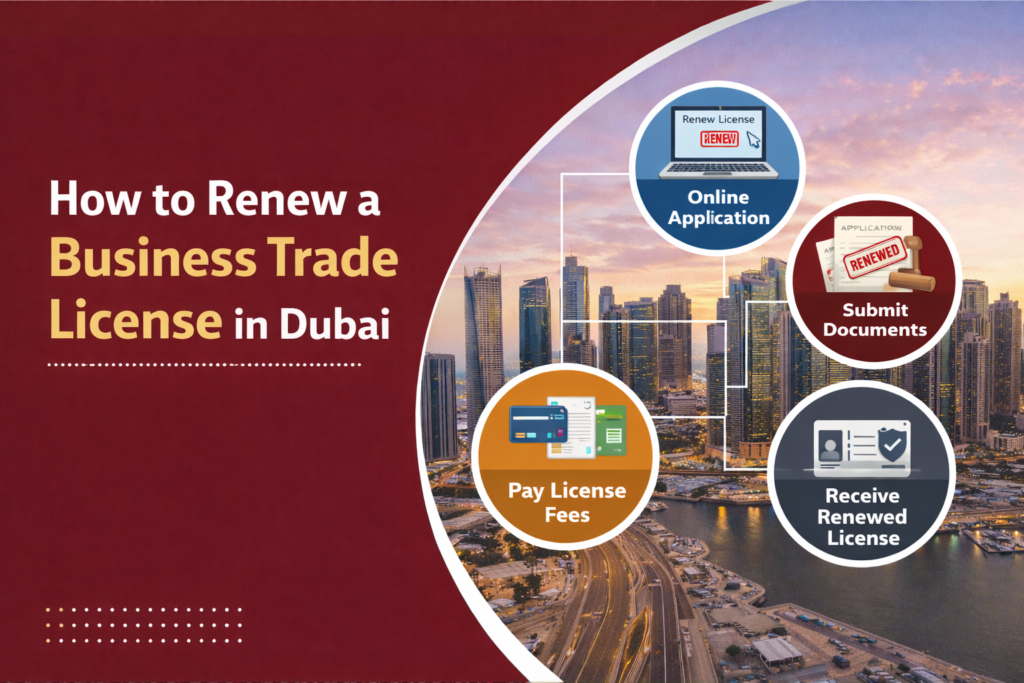
You must renew your license every year. The process involves:
- Updating the Tenancy Contract: Ensure your Ejari is still valid for the coming year and matches the trade license details.
- Submitting the Application: Submitting the Application properly through the relevant mainland or free zone portal, confirming that your activities, shareholder details, and contact information are up to date.
- Paying Fees: Pay all administrative and renewal fees, including any establishment card, immigration, or chamber of commerce renewals where applicable.
- Receiving the License: Download or receive your updated license electronically once approved and share it with your bank, partners, and any regulators who require it.
11. Conclusion: Partner with TAP Fiscal
Securing a Business trade license in Dubai is the foundational step toward your success. Whether you are aiming for a commercial trade license, a professional consultancy, or an e-commerce setup, your choice will dictate your tax liabilities, banking ease, and growth potential.
In the 2026 regulatory environment, setup is about more than just a permit—it’s about staying compliant with Corporate Tax filings, UBO (Ultimate Beneficial Owner) declarations, and AML requirements.
Your 2026 Compliance Checklist:
Before you finalize your setup, ensure you have a plan for:
- Corporate Tax Registration: Mandatory for all license holders, even if you qualify for 0% tax.
- UBO Declaration: Must be submitted to the licensing authority within 15 days of issuance.
- VAT Assessment: Mandatory if your taxable turnover exceeds AED 375,000.
- Small Business Relief: Check if your revenue qualifies for the AED 3 million threshold relief.
At TAP Fiscal, we specialize in more than just paperwork. We are your strategic partners in navigating the latest Mainland and Free Zone regulations, ensuring your structure is optimized for tax, and handling the complexities of Corporate Bank Account opening.
Focus on growing your business while we handle the fiscal and legal heavy lifting.
Frequently Asked Questions (FAQs)
What is a business trade license in Dubai?
A business trade license in Dubai is the legal permit required to operate any commercial, professional, industrial, or online activity. It authorises the company to conduct approved operations, access corporate banking, hire employees, and establish a lawful presence in the UAE. Every business must hold a valid, updated license.
Why do I need a trade license in Dubai?
A trade license is required to legally run a business, comply with UAE regulations, and prevent fines or closure. It allows companies to conduct approved activities, open bank accounts, apply for visas, rent office space, and participate in contracts. Without it, business operations are considered illegal within Dubai.
What are the main types of trade licenses in Dubai?
The main trade licenses include commercial licenses for trading activities, professional licenses for service-based businesses, industrial licenses for manufacturing, and e-commerce licenses for online operations. Each license defines the nature of permitted business activities and determines the regulatory requirements, costs, and approvals needed for legal operation.
Who issues trade licenses in Dubai?
Mainland trade licenses are issued by the Dubai Department of Economy and Tourism, while free zone licenses are issued by individual free zone authorities. Each authority enforces its own rules, activity lists, and documentation requirements, ensuring businesses meet regulatory standards for their chosen jurisdiction and specific commercial activities.
What are the steps to get a trade license in Dubai?
The process includes selecting activities, choosing a business structure, reserving a trade name, obtaining initial approval, securing an office or flexi-desk, preparing documents, submitting applications, and paying government fees. Once processed, the trade license is issued, enabling the company to begin legal operations within the chosen jurisdiction.
What documents are required for a trade license in Dubai?
Common documents include passport copies of shareholders, photos, trade name reservation, initial approval forms, tenancy or Ejari certificate, and activity list. Certain activities may require additional approvals. Free zones may request fewer documents, while regulated sectors must provide professional qualifications or external authority permissions.
How long does it take to get a trade license in Dubai?
Most trade licenses are issued within one to seven working days once all documents are ready. Free zones often offer faster processing, while specialised activities requiring approvals may take longer. Dubai’s streamlined establishment process facilitates rapid business formation for both local and international entrepreneurs across various industries.
What is the cost of getting a trade license in Dubai?
Costs depend on the license type, jurisdiction, number of activities, office space, and visa requirements. Mainland licenses generally cost more due to office leases, while free zones provide affordable packages. Total expenses may range from economical startup options to premium setups based on business needs and government fees.
Can foreign investors own 100% of the business in Dubai?
Yes, foreign investors can own 100% of their business in all free zones and most mainland sectors. Recent reforms allow full ownership in many commercial and professional activities. Some strategic or regulated industries may still require local participation or specific approvals, depending on the nature of the business.
How can I renew my trade license in Dubai?
Renewal requires submitting updated tenancy or Ejari documents, verifying activity compliance, updating shareholder details if needed, and paying renewal fees. The process must be completed annually to maintain legal operations. Timely renewal prevents penalties and ensures continued access to visas, banking, and regulatory approvals.
Can I upgrade or change my trade license later?
Yes, businesses can modify or upgrade their trade license by adding activities, changing ownership, shifting jurisdictions, or adjusting the legal structure. This requires approval from the licensing authority, updated documentation, and payment of modification fees. Such flexibility supports business growth, diversification, and operational expansion within Dubai.
What’s the difference between a mainland and a Free Zone trade license?
A mainland license allows unrestricted business within the UAE market, broader activity choices, and access to government contracts but requires a physical office and full compliance with onshore regulations. A free zone license offers 100% foreign ownership, sector‑focused environments, and cost‑efficient setup, but it generally restricts direct trading inside the UAE without using a local distributor or establishing a mainland branch or company.
Do I need an office to get a trade license in Dubai?
Most mainland licenses require a physical office or approved flexi‑desk linked to your trade license, and the size of the space can affect your visa quota. Many free zones allow flexi‑desks, co‑working, or virtual office packages, especially for startups and freelancers, while offshore entities cannot use UAE offices for local trading and are not designed for onshore operations.