
Dubai has become one of the world’s most attractive destinations for entrepreneurs. With its strategic location and modern infrastructure, company formation in Dubai offers unmatched opportunities for startups and large enterprises. Whether you are launching a small trading firm or a multinational corporation, understanding the legal landscape is essential for success.
This guide explains everything you need to know about company formation in Dubai, including licenses, types of companies, and the required documentation.
1. Understanding Company Formation in Dubai

Company formation in Dubai is the legal process of registering a business with the UAE authorities. The emirate offers three main jurisdictions: Mainland, Free Zone, and Offshore. Each caters to different business goals and market access needs.
Key features of company formation include:
- A transparent and stable regulatory framework.
- Instant access to growing global markets.
- Flexible ownership options for foreign investors.
- Strong government initiatives and digital support.
2. Benefits of Company Formation in Dubai

Numerous advantages make Dubai a preferred business hub globally:
- Strategic Location: Dubai connects Asia, Europe, and Africa. This makes it ideal for international trade and logistics.
- Emirati Corporate Citizenship: Firms now hold “Corporate Nationality” status. This gives foreign-owned firms a clear identity for government tenders and trade agreements.
- Tax-Friendly Environment: * No personal income tax.
- 9% corporate tax only on profits exceeding AED 375,000.
- No capital gains tax in most cases.
- 100% Foreign Ownership: Recent reforms allow full ownership across many business activities in both mainland and free zones.
- World-Class Infrastructure: Access to advanced transport, communication, and digital networks.
3. Types of Business Licenses

Choosing the correct license is a critical step in company formation in Dubai. It defines what your business is allowed to do.
A. Commercial License
This is for trading activities. It covers the import, export, retail, and distribution of goods.
B. Professional License
This is for service-based businesses. It is ideal for consultants, IT specialists, educators, and healthcare providers.
C. Industrial License
This is for manufacturing and production. It is required for factories and industrial units that process raw materials into finished products.
4. Types of Company Formation in Dubai
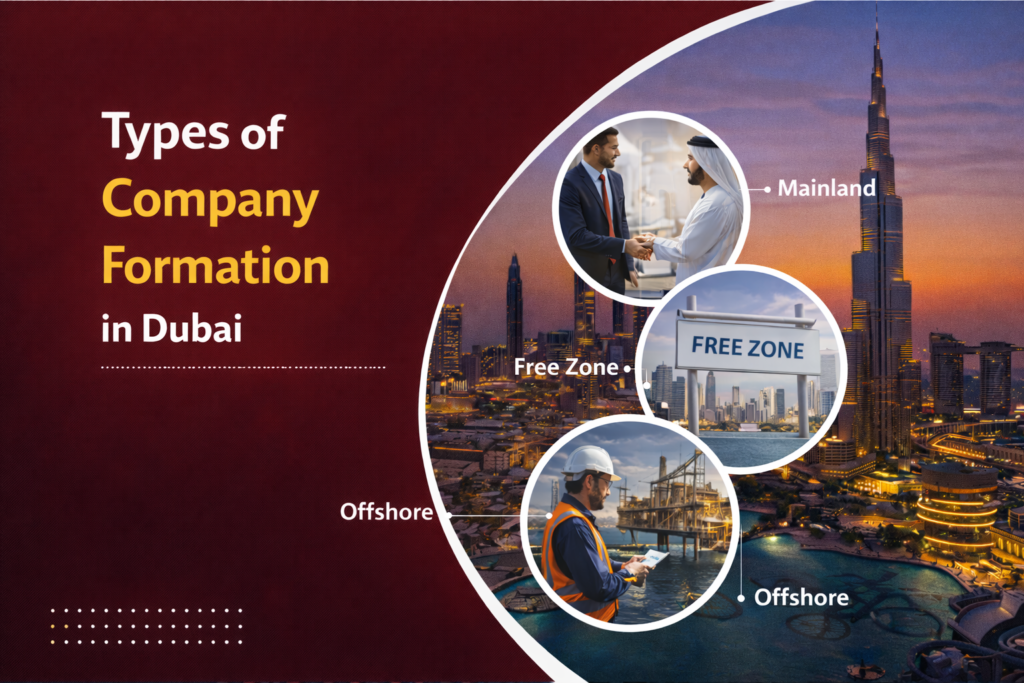
Investors must choose a structure that fits their target audience:
- Mainland Company Formation: Registered with the Department of Economy and Tourism (DET). These firms can operate anywhere in the UAE and bid for government contracts.
- Freezone Company Formation: Popular for simplified procedures and customs exemptions. It is ideal for startups and service providers targeting international markets.
- Offshore Company Formation: Best for asset protection and holding companies. These entities cannot conduct business within the UAE local market.
5. Steps of Company Formation in Dubai
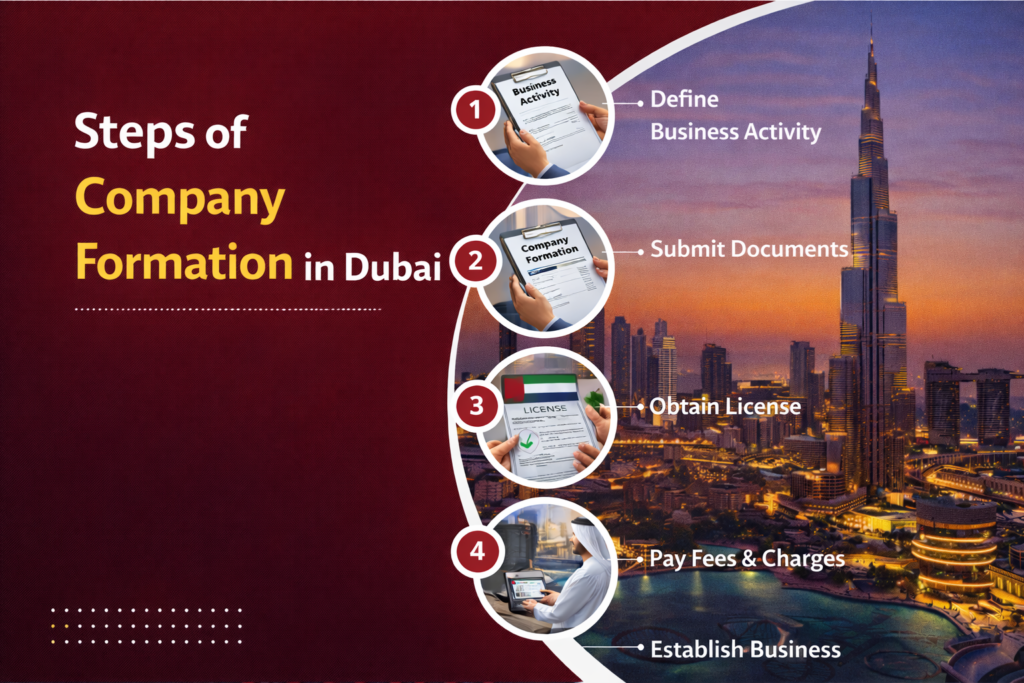
Following the correct steps ensures a smooth setup process:
- Choose Business Activity: Select activities that align with your long-term goals.
- Select Jurisdiction: Decide between mainland, free zone, or offshore.
- Choose Company Name: Ensure the name complies with UAE regulations and get it approved.
- Apply for Initial Approval: This confirms the government has no objection to your setup.
- Prepare Legal Documents: Draft the Memorandum of Association (MOA) and other agreements.
- Obtain Business License: Submit final paperwork and pay the applicable fees.
- Open Corporate Bank Account: This is required for all business transactions.
6. Documents Required for Company Formation in Dubai
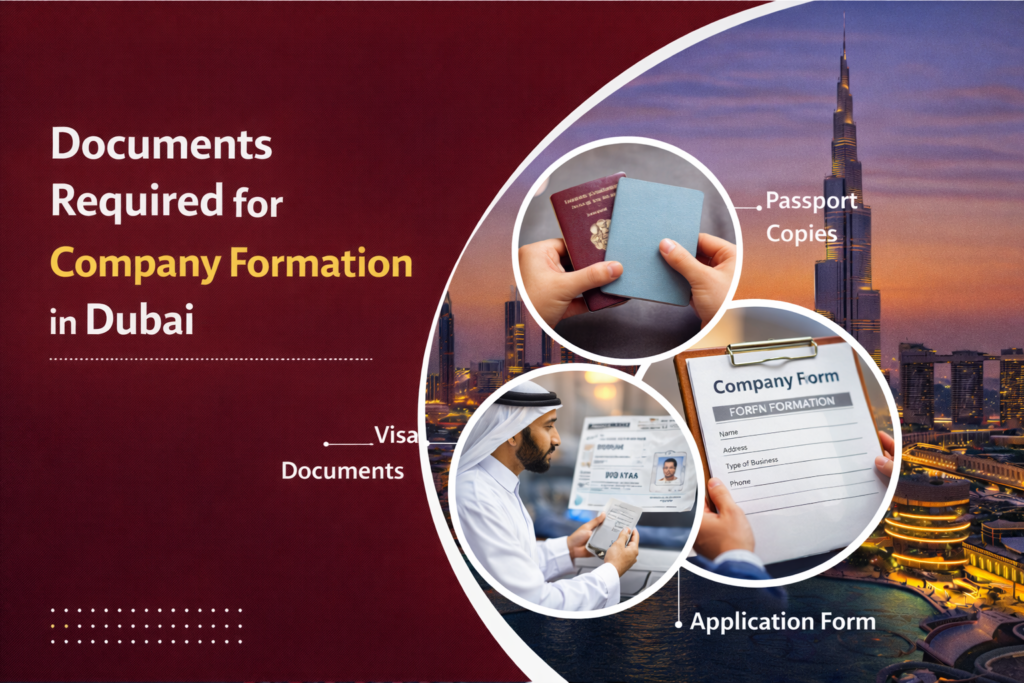
The documents required for company formation in Dubai may vary, but common items include:
- Passport copies of all shareholders and directors.
- Visa copy or Emirates ID (for residents).
- A clear Business Plan (for specific regulated activities).
- Trade name reservation and initial approval certificates.
- Memorandum and Articles of Association.
7. Company Formation Packages in Dubai
Many jurisdictions offer bundles to simplify the process. These packages often include the license, registration, and office solutions.
Mainland Starter Packages (From AED 18,500)
Includes a Professional/Commercial license, local representative support, and help with PRO services and paperwork.
Free Zone Setup Options
- IFZA (Starting at AED 13,900): Offers quick online access and various permit types with or without visa options.
- DWTC (Starting at AED 23,000): Located in the heart of the business district, perfect for tech and media firms.
- Rakez/Sharjah (AED 6,900–11,000): Budget-friendly options near major shipping and flight hubs.
Conclusion
Company formation in Dubai is a strategic move for those seeking global reach and fiscal efficiency. With 100% ownership options and 2026’s unified Corporate Citizenship framework, Dubai remains the top choice for investors. Proper planning and compliance with the 9% corporate tax and VAT regulations will ensure long-term success.
For expert support and reliable solutions tailored to your business goals, TAP Fiscal provides end-to-end assistance. We help you start your Dubai business journey with confidence and total compliance.
Frequently Asked Questions (FAQs)
1. What is company formation in Dubai?
Company formation in Dubai is the legal process of registering a business entity under UAE regulations. It involves selecting a business activity, choosing a jurisdiction, obtaining a license, and completing government approvals to legally operate a business in Dubai.
2. Why should I start a company in Dubai?
Dubai offers a strategic location, tax-friendly policies, modern infrastructure, and access to global markets. Its business-friendly regulations, political stability, and growing economy make it an ideal destination for entrepreneurs and investors seeking long-term growth.
3. What are the types of company formation in Dubai?
The main types of company formation in Dubai include mainland companies, free zone companies, and offshore companies. Each option offers different ownership structures, operational flexibility, and regulatory requirements based on business objectives and target markets.
4. Can foreigners own 100% of a company in Dubai?
Yes, foreigners can own 100% of a company in Dubai in most business activities. This applies mainly to free zone companies and many mainland activities, following recent regulatory reforms that support full foreign ownership.
5. What documents are required for company formation in Dubai?
Documents required for company formation in Dubai typically include passport copies of shareholders, visa copies (if applicable), Emirates ID for residents, trade name reservation, initial approval certificate, and Memorandum of Association, depending on the jurisdiction.
6. What business licenses are available in Dubai?
Dubai offers commercial, professional, and industrial licenses. Each license type corresponds to specific business activities such as trading, services, or manufacturing, ensuring businesses operate within legal and regulatory frameworks.
7. Can I open a corporate bank account after company formation?
Yes, after completing company formation in Dubai, you can open a corporate bank account. Banks require company registration documents, shareholder details, and compliance checks before approving the account for business transactions.
8. Do I need a local sponsor for company formation in Dubai?
A local sponsor is no longer required for many business activities in Dubai. Foreign investors can fully own their companies in free zones and most mainland sectors, subject to government-approved activities.
9. Is Dubai company formation taxable?
Dubai company formation benefits from a favorable tax environment. While personal income tax is not applicable, corporate tax may apply based on business activities and income thresholds, following UAE tax regulations.
10. Can I get a UAE residence visa through company formation?
Yes, company formation in Dubai allows business owners, partners, and employees to apply for UAE residence visas. Visa eligibility depends on the company type, office space, and visa quota allocated to the business.
11. Can I operate internationally with a Dubai-registered company?
Yes, a Dubai-registered company can operate internationally. Free zone and offshore companies are particularly suited for global operations, international trade, and cross-border services, subject to compliance with UAE and international regulations.
12. Is it possible to change or upgrade business activities later?
Yes, businesses can modify or upgrade their activities after company formation in Dubai. This requires approval from the relevant authority and updating the business license to reflect the new or expanded activities.
13. How much does company formation in Dubai cost?
Costs range from AED 12,000 to 50,000 depending on jurisdiction and package. Free zones start at AED 12,000 (e.g., IFZA) and mainland at AED 15,000–30,000; this includes license, visas, and flexi-desk. Annual renewals add AED 8,000–15,000.
14. How long does company formation take in Dubai?
Typically 1–4 weeks. Free zones are often completed in 3–7 days via digital portals; mainland takes 2–4 weeks due to DED approvals and office leasing.
15. Do I need an office for company formation?
Mainland requires physical space (tied to visa quotas: 1 visa per 8–10 sqm). Free zones offer flexi-desks or virtual licenses for select activities under the 2026 reforms.
16. What is the corporate tax rate after formation?
0% on profits below AED 375,000; 9% above. Free zone firms qualify for 0% on qualifying income if compliant with substance rules.
17. Mainland vs. Free Zone vs. Offshore—which is best?
- Mainland: UAE market access, government contracts.
- Free Zone: 100% ownership, tax exemptions, international focus.
- Offshore: Asset holding, no UAE trading. Choose based on the target market.
18. What are the annual compliance requirements?
License renewal, audits (if revenue > AED 50M), VAT registration (5% if > AED 375,000), UBO filing, and employee labor filings via MoHRE.