1. Introduction
The UAE has positioned itself as one of the most business-friendly destinations in the world, attracting entrepreneurs, startups, and multinational companies alike. One of the most popular ways to establish a business presence is through freezone company formation in UAE, which offers ownership flexibility, tax advantages, and simplified procedures.
Specially designated areas known as free zones encourage foreign investment by offering streamlined regulations and operational ease. Understanding the UAE free zone company setup environment is essential whether you are planning a startup, expanding an international business, or setting up a regional headquarters. This guide explains everything from free zone concepts and benefits to costs, documentation, and step-by-step setup procedures.
2. What Is the Dubai Free Zone?
A Dubai free zone is a designated economic area governed by its own authority, offering business-friendly regulations and incentives to foreign investors.
Key Characteristics of Dubai Free Zones
- 100% foreign ownership allowed
- Independent regulatory framework
- No customs duty on imports and exports within the free zone
- Simplified company registration procedures
- Industry-specific free zones available
Each free zone operates under specific Dubai free zone rules and regulations, designed to support targeted business activities such as trade, technology, logistics, media, or finance.
3. How to Start a Business in Dubai Free Zone?
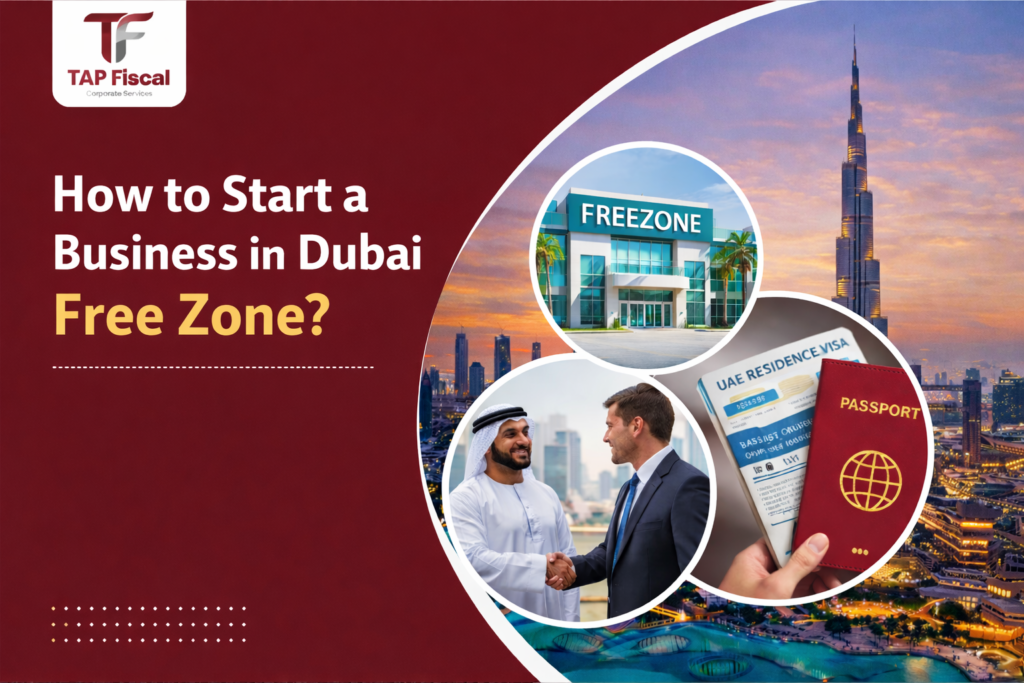
Starting a business in a free zone involves choosing the right jurisdiction, business activity, and license type.
Initial Planning Considerations
- Nature of business activity
- Target market (local or international)
- Office or workspace requirements
- Budget for setup and ongoing costs
A well-planned UAE freezone company setup ensures long-term compliance and operational efficiency.
4. Popular Free Zones in Dubai, UAE
Dubai hosts several globally recognized free zones catering to different industries.
Popular Dubai Free Zones
- International Free Zone Authority (IFZA)
- Dubai International Financial Centre (DIFC)
- Jebel Ali Free Zone (JAFZA)
- Dubai Multi Commodities Centre (DMCC)
- Ajman Free Zone (AFZ)
- Ras Al Khaimah Economic Zone (RAKEZ)
- Dubai Airport Free Zone (DAFZA)
- Meydan Free Zone
Each zone has its own policies, licensing structures, and infrastructure, making company formation in Dubai free zone highly customizable based on business needs.
Key Features of Free Zones in Dubai
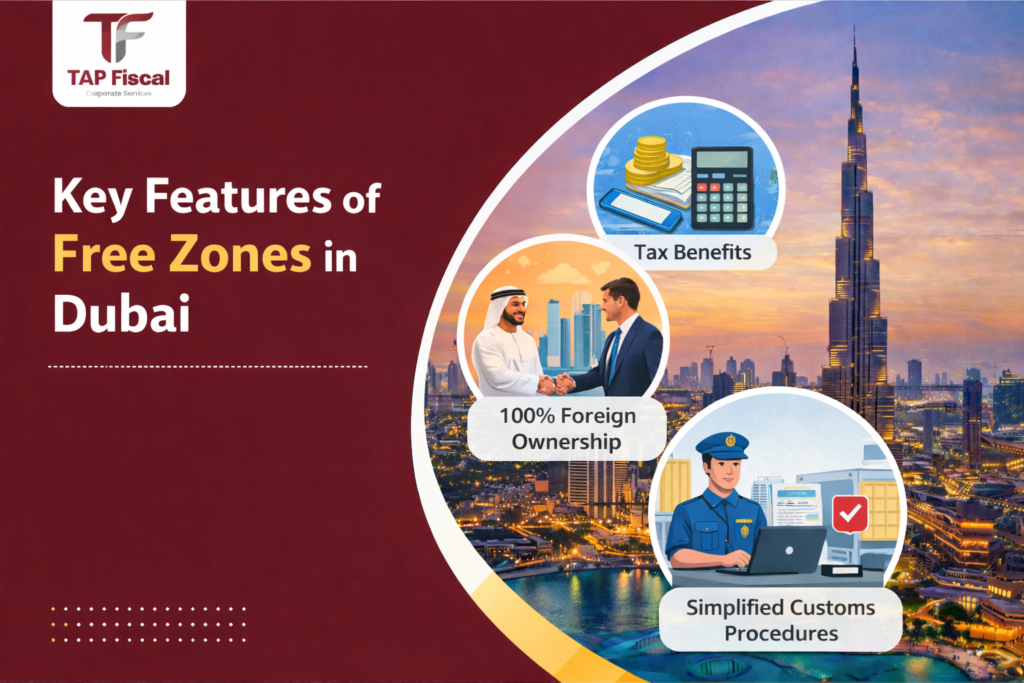
- Investors can establish complete ownership of their business operation without requiring any local business partner.
- Free Zones operate without personal income tax or corporate tax on qualifying income for Qualifying Free Zone Persons (QFZPs), but non-qualifying income is taxed at 9% under 2026 regulations; some zones within these areas need to pay VAT if turnover exceeds AED 375,000
- Business owners can send all profits and capital back to their home country.
- The company registration process became more efficient because it required less documentation to finish the process.
- The Free Zone grants duty-free status to all imported and exported goods which pass through its designated area.
- The Free Zones operate as separate entities which serve particular business sectors through their dedicated infrastructure and service offerings.
- Investors have three office options to select from which include virtual offices and shared workspaces and private offices.
- Free Zones operate with fully developed logistics facilities and warehousing operations and customs clearance services which help facilitate international business activities.
5. Benefits of Starting a Business in Dubai Free Zone
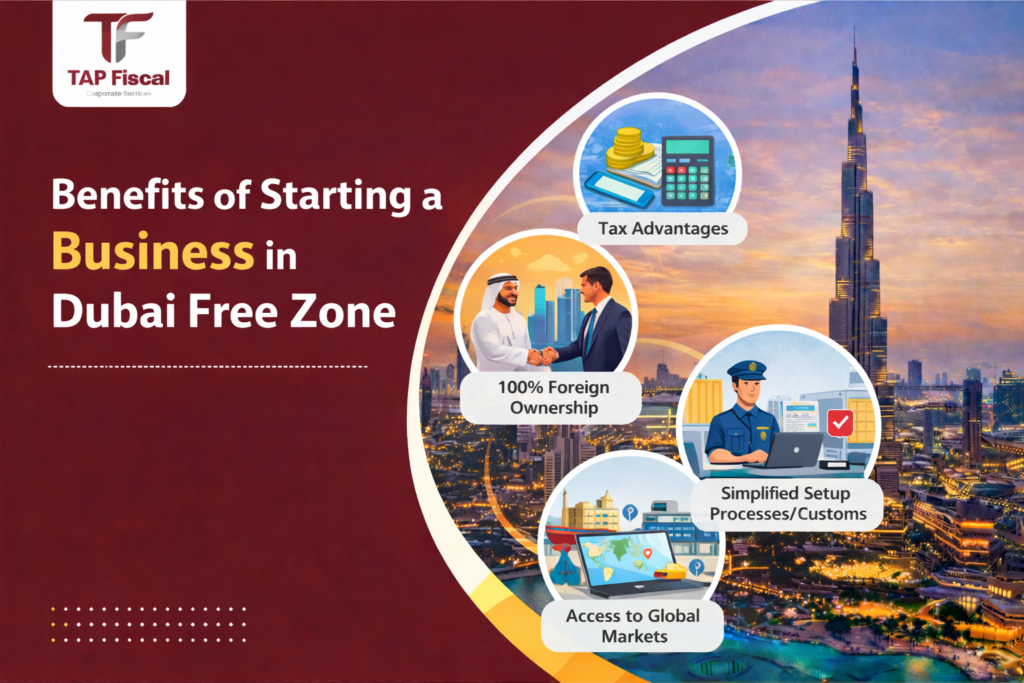
Free zones are specialized economic areas designed to attract foreign investment by offering a highly competitive and simplified business environment. In 2026, these jurisdictions remain the top choice for international entrepreneurs due to their unique financial and operational perks.
1. 100% Foreign Ownership
Investors can maintain complete legal control of their company without the requirement for a local Emirati partner or sponsor.
2. Full Repatriation of Profits and Capital
Business owners have the freedom to transfer all of their earned profits and original capital back to their home country without any restrictions or currency controls.
3. Corporate Tax Incentives
Qualifying free zone entities can benefit from a 0% corporate tax rate on qualifying income, provided they meet specific substance and compliance requirements (e.g., core activities in-zone, audited financials) under 2026 regulations; non-qualifying income taxed at 9%.
4. Simplified Import and Export Procedures
Goods moved into a free zone are exempt from customs duties, significantly reducing the cost of logistics for international trading and manufacturing firms.
5. Fast Company Registration Timelines
Free zone authorities operate “one-stop shops” that allow for rapid licensing and visa processing, often enabling businesses to become operational in just a few working days.
6. Industry-Specific Ecosystems
Many free zones are tailored to specific sectors, such as technology, media, or finance, providing a built-in network of suppliers, partners, and specialized infrastructure.
6. Setup Costs Overview
Costs vary by free zone, license type, and visas. Typical ranges for 2026:
Free Zone | Setup Cost (AED) | Annual Renewal (AED) | Visas Included |
IFZA | 12,000-25,000 | 12,000-20,000 | 1-3 flexi |
DMCC | 35,000-100,000 | 25,000+ | Office-based |
| JAFZA | 25,000-50,000 | 20,000+ | High quota |
| RAKEZ | 7,000-15,000 | 7,000-15,000 | Flexi |
Minimum capital is often none (e.g., IFZA), but declared for visas; some like DMCC require AED 50,000.
7. Choosing the Right License for Free Zone Setup
The selection of the proper business license is a critical part of free zone setup because it defines your legal scope of operations. In 2026, Dubai free zones offer specialized licenses to match the evolving needs of global entrepreneurs.
1. Commercial License
This license is designed for businesses engaged in the trading of goods, including the import, export, and distribution of products across international markets.
2. Professional License
The professional license is mandatory for service-oriented entities such as consultancy firms, legal advisors, and IT service providers.
3. Industrial License
Manufacturing and production companies require this license to carry out activities like food processing, textile fabrication, or packaging within a specialized facility.
4. E-Commerce License
This license allows entrepreneurs to operate legally through online stores, digital marketplaces, and social media platforms without needing a physical retail shop.
5. Freelance Permit
The freelance permit offers a cost-effective legal framework for independent contractors and creative professionals to provide services without forming a full corporate entity.
6. Service License
A service license is specifically tailored for companies providing technical or non-consultative services, such as repair work or hospitality management.
7. General Trading License
This premium license allows a single company to trade in multiple unrelated categories of goods under one legal umbrella, providing maximum operational flexibility.
7. Required Documents for Free Zone Company Setup
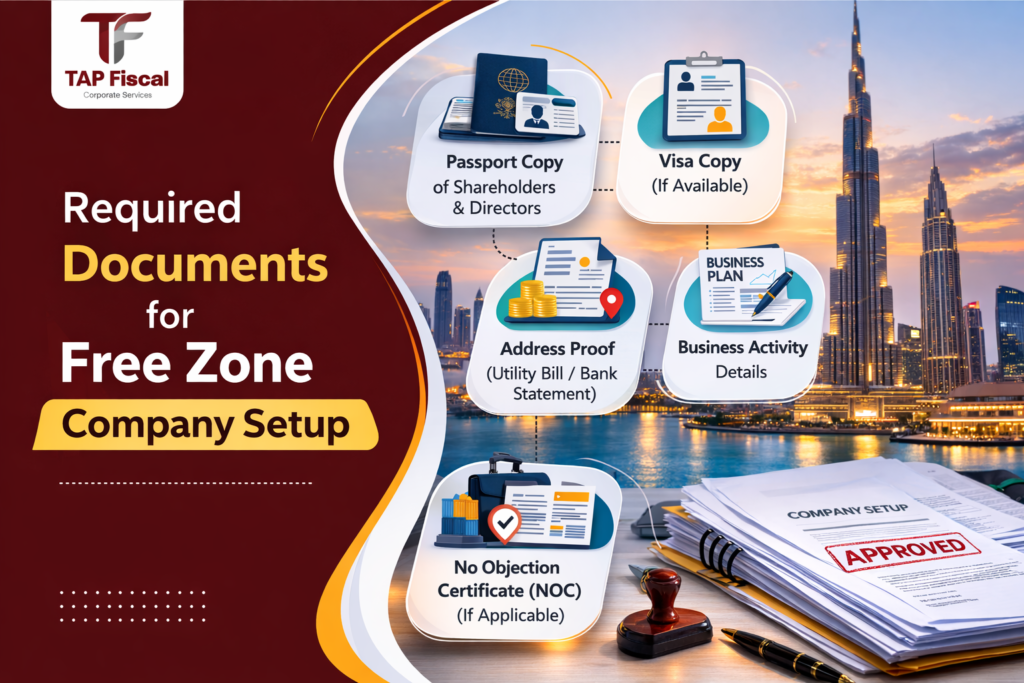
Preparing accurate Dubai Free Zone company formation requirements ensures a smooth registration process.
Documents Required for Dubai Free Zone Company Formation
- Passport copies of shareholders and directors
- Passport-size photographs
- Business activity description
- Application form
- Proof of address
- Resume or business profile (in some cases)
- Business plan (for regulated activities)
- Board resolution or NOC (if applicable)
Additional documents may be requested depending on the free zone authority and business activity.
9. How to Start a Business in Dubai Free Zone? Step-by-Step Process
The Dubai Free Zone company setup process operates through a streamlined system that needs minimal paperwork to achieve quick approval results, typically 1-4 weeks. Free Zones provide entrepreneurs with complete foreign ownership rights and tax advantages, and streamlined business establishment processes.
The following steps guide you through the process of establishing your Free Zone business operation.
1. Choose the Right Free Zone
Dubai operates more than 40 Free Zones which serve specific business sectors, including technology and trade and finance and media and logistics, and healthcare. Consider business activity permissions, office space and visa quota requirements, proximity to markets and logistics facilities, budget and operational flexibility. Popular options: IFZA (affordable general setups), DIFC (fintech), DMCC (trading/commodities), JAFZA (industrial/logistics), Dubai Silicon Oasis (IT/AI).
Business activity permissions
- Office space and visa quota requirements
- Proximity to markets and logistics facilities
- Budget and operational flexibility
- Some of the most popular Dubai Free Zones include:
- The International Free Zone Authority (IFZA) allows businesses to set up operations at affordable costs through its various office solutions, which fulfill different operational needs.
- DIFC (Dubai International Financial Centre) – Best for financial and fintech companies
- The Dubai Multi Commodities Centre (DMCC) operates as an excellent location for businesses that engage in trading activities, commodities trading and cryptocurrency operations.
- JAFZA (Jebel Ali Free Zone) operates as a business zone that serves industrial and logistics companies.
- Dubai Silicon Oasis (DSO) serves as the top location for businesses operating in IT and AI and innovation-based sectors.
2. Select Your Business Activity
Each Free Zone has a list of approved business activities. The activity you select needs to have backing from your chosen Free Zone. Specific industries like finance, education, and healthcare require approvals from UAE Central Bank, KHDA, or DHA.
3. Choose the Company Structure
Choosing the right company structure is a key step in your Dubai company incorporation process. Free Zones operate through three separate business structures which companies can choose from.
- The Free Zone Establishment (FZE) offers solo entrepreneurs and small businesses an excellent choice because it allows one shareholder to retain full foreign ownership rights while providing protection against business liabilities.
- Free Zone Company (FZC/FZCO) serves partnerships and businesses with multiple shareholders because it allows operations with 2 to 5 shareholders who select this structure for their trading and consulting and service-based businesses.
- Branch of an Existing Company: If you already own a business locally or internationally, you can establish a branch in a Free Zone. The parent company operates with full control through its existing structure which does not require establishing a separate legal entity.
4. Reserve a Trade Name
Choose a distinctive business title that needs to go through the approval process. The name must:
- Not violate public morals or religion
- Be available and not already registered
- Align with your business activity
- The final section should include a legal entity identifier, which could be either FZE or FZCO.
5. Submit the Application & Required Documents
Once you’ve selected the Free Zone, legal structure, and trade name, you must submit your business registration application along with the necessary documents. The required documents consist of.
- Passport copies of shareholders and directors
- Entry stamp or UAE visa copy (if applicable)
- The applicant needs to submit proof of address together with a No Objection Certificate (NOC) when the document becomes necessary.
- Business plan (for certain regulated activities)
- Memorandum of Association (MoA) and Articles of Association (AoA) (provided by the Free Zone authority)
6. Obtain a Free Zone Business License
After your application is processed, you will receive your Dubai Free Zone business license, which allows you to legally operate your company. Your business activity determines which license type you need to obtain.
- Commercial License: For trading and general trading businesses
- Service License: For consultancies, marketing, IT, and other service-based companies
- Industrial License: For manufacturing and industrial businesses
- E-commerce License: For online businesses and digital marketplaces
- The business license issuance process at most Free Zones takes between 7 to 15 working days. Free Zones provide businesses with dual licensing options, which enable them to run their operations in Free Zone territory and mainland markets through specific regulatory frameworks.
7. Lease Office Space (If Required)
Based on your business model, you may need an office space. Free Zones provide investors with various choices which include:
- Flexi-desk or Virtual Office
- Shared Office
- Private Office
- Warehouse or Industrial Units
- The Free Zones system allows businesses to run their operations from anywhere but certain zones require physical offices for employee visa authorization.
8. Open a Business Bank Account
Banks like Emirates NBD, Mashreq, ADIB, HSBC, or Citibank require trade license, incorporation certificate, shareholders’ passports, the MoA/AoA, and an office lease. Expect stricter 2026 AML checks.
9. Apply for Visas
Your company needs to finish the incorporation process before you can apply for these programs.
- Investor Visa: For business owners and shareholders
- Employment Visa: For company employees
- Dependent Visa: For family members of investors and employees
The Free Zone regulations, together with office space dimensions, determine the total number of visas which can be granted. Free Zones operate with two different visa business policies because they either provide free visa services or they need businesses to maintain specific office areas for visa operations.
10. Register for VAT (If Applicable)
Your company needs to register with the Federal Tax Authority (FTA) for VAT when your yearly business revenue reaches AED 375,000 or more. Businesses need to register for VAT under the law when their yearly sales exceed AED 187,500, even though their present sales do not meet this requirement.free zone,
The establishment of a business within a Dubai Free Zone provides entrepreneurs with complete ownership rights, tax benefits, and streamlined business operations. The selection of an appropriate Free Zone, together with the management of its establishment, needs specialized knowledge from an expert.
TAP Fiscal Business Setup can help you choose the best Free Zone, handle documentation, licensing, and bank account opening, and assist with visas and taxation services.
Conclusion
Free zone business setup continues to be one of the most efficient and flexible ways to establish a company in the UAE. With benefits such as full ownership, simplified regulations, industry-focused zones, and scalable cost structures, free zone company formation in uae offers strong advantages in the process of forming a company in a free zone for global entrepreneurs. From understanding regulations and documentation to managing setup costs and licensing, informed planning is essential for long-term success, including QFZP compliance for 0% tax. For businesses seeking expert guidance and end-to-end support throughout the free zone company formation process, TAP Fiscal provides professional assistance to help ensure a smooth and compliant setup journey.
Learn more about freezone company formation in the UAE with Tap Fiscal today!
Call: +971502890630
WhatsApp: +971502890630
Email: Aina.k@tapfiscal.com
Frequently Asked Questions
1. What is a UAE Free Zone company?
A UAE Free Zone company is a business entity established within a designated free zone jurisdiction. It allows foreign investors to own 100% of the company while benefiting from simplified regulations, tax advantages, and streamlined business setup processes governed by the respective free zone authority.
2. What are the benefits of forming a company in a UAE Free Zone?
Key benefits include 100% foreign ownership, full profit and capital repatriation, simplified licensing procedures, customs duty exemptions within the free zone, and access to modern infrastructure. Free Zones also offer industry-focused environments that support international trade and business expansion.
3. Who can set up a Free Zone company in the UAE?
Any individual or corporate entity, including foreign nationals and international companies, can set up a Free Zone company in the UAE. There are no nationality restrictions, provided the applicant meets the free zone authority’s requirements and complies with licensing and regulatory guidelines.
4. How many free zones are there in the UAE?
The UAE has more than 40 Free Zones across different emirates, each catering to specific industries such as trade, technology, logistics, media, finance, and manufacturing. Every Free Zone operates under its own authority with tailored regulations and business support services.
5. What types of licenses are available in the UAE Free Zones?
UAE Free Zones offer various license types, including trading licenses, service licenses, industrial licenses, commercial licenses, and e-commerce licenses. The type of license issued depends on the nature of business activities approved by the selected Free Zone authority.
6. What is the minimum capital requirement to open a Free Zone company?
Minimum capital requirements vary by Free Zone and license type. Some Free Zones have no minimum capital requirement, while others specify an amount that must be declared or deposited. Capital requirements are usually outlined during the company registration process.
7. How long does it take to set up a Free Zone company?
Setting up a Free Zone company typically takes between one and four weeks. The timeline depends on the chosen Free Zone, license type, document submission, and approval processes. Simple setups with complete documentation can often be completed more quickly.
8. What documents are required for Free Zone company formation?
Commonly required documents include passport copies of shareholders and directors, passport-size photographs, application forms, business activity details, and proof of address. Additional documents may be requested depending on the Free Zone authority and the nature of the business.
9. Can a Free Zone company operate anywhere in the UAE?
A Free Zone company can operate within its designated Free Zone and internationally. To conduct business directly in the UAE mainland, it may need to appoint a local distributor or establish a branch or subsidiary under mainland regulations.
10. Can a Free Zone company open a corporate bank account in the UAE?
Yes, a Free Zone company can open a corporate bank account in the UAE. Banks typically require company registration documents, shareholder information, business activity details, and compliance checks before approving the account opening.
11. Can I convert a Free Zone company to a mainland company?
Free Zone companies can transition to mainland operations in 2026 via regulatory approvals. The process involves obtaining a No Objection Certificate (NOC) from the Free Zone authority, securing Department of Economic Development (DED/DET) approval for a new mainland license, arranging a physical office with Ejari registration, and transferring visas/employees through GDRFA/MOHRE. You’ll also need to update bank KYC, file VAT if applicable, and comply with separate accounting for tax (9% corporate rate on the mainland). New mainland LLCs or branches preserve assets/contracts; timelines average 2-6 weeks.
12. What are the top free zones in the UAE for company formation?
Top free zones for 2026 setups include IFZA (affordable general/startups), RAKEZ (cost-effective, flexi options), DMCC (trading/commodities), JAFZA (logistics/industrial), DIFC (fintech/finance), Sharjah Media City (creative/services), and Dubai Silicon Oasis (tech/AI). Selection depends on activity, budget (RAKEZ/IFZA cheapest at AED 10k-25k setup), and visas.
13. What are the latest 2026 free zone license fees?
Fees vary: IFZA (AED 12k-25k setup, AED 10k-20k renewal), RAKEZ (AED 8k-18k setup), DMCC (AED 35k+), JAFZA (AED 25k-50k), Sharjah (AED 8k-15k). Add-ons: visas AED 3k-5k each, flexi-desk AED 5k-15k/year. No min. capital in most; check zone portals for exacts as digital portals cut costs 10-20% in 2026.
14. How to choose between FZE and FZCO structures?
Choose FZE (Free Zone Establishment) for solo owners (1 shareholder max, full ownership/liability protection, ideal for freelancers/startups). Opt for FZCO (Free Zone Company) for partnerships (2-50 shareholders, flexible for trading/services, same benefits). FZE suits simplicity/low cost; FZCO for growth/scalability—both allow 100% foreign ownership, profit repatriation.