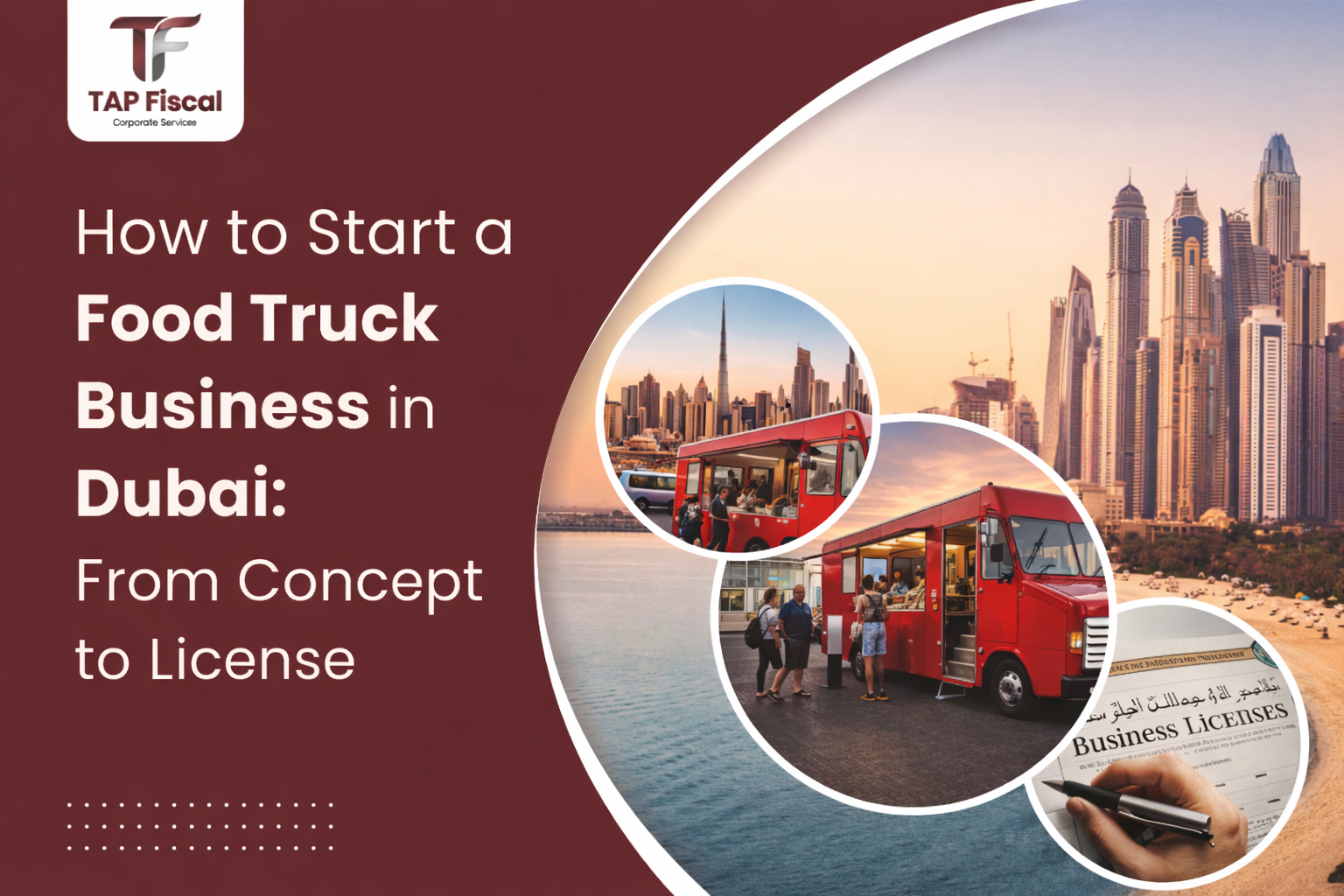
Dubai is a city where innovation meets luxury, and the culinary scene is no exception. In recent years, the streets of this vibrant metropolis have been transformed by a rolling gastronomic revolution: the food truck. From gourmet sliders on Kite Beach to artisanal coffee in Dubai Design District, food trucks have become a permanent and beloved fixture of the city’s social fabric.
If you have ever dreamt of serving your signature dishes against the backdrop of the Burj Khalifa or the glittering Dubai Marina, there has never been a better time to learn how to start a food truck business in Dubai. This guide will walk you through every critical step, from regulatory hurdles to technical specifications, ensuring your kitchen is built for success in 2026.
1. Why Dubai Is Ideal for a Food Truck Business in Dubai
Dubai’s pro-business environment and relentless appetite for new dining concepts make it one of the world’s most compelling cities for food entrepreneurs. Here is what sets it apart:
- Diverse Demographics: With over 200 nationalities calling Dubai home, a food truck business in Dubai can successfully serve niche global cuisines — Korean BBQ, Peruvian ceviche, Levantine street food — that would struggle to fill a brick-and-mortar restaurant.
- Outdoor Culture: Dubai’s cooler months, from October to April, drive a vibrant outdoor lifestyle. Parks, beachfronts, and dedicated truck parks like Last Exit fill with customers looking for quick, high-quality meals
- Year-round event calendar: From the Dubai Shopping Festival to international sporting tournaments and Global Village, the city generates a constant stream of high-footfall events where mobile food operators thrive.
- Government Support for SMEs: The Dubai government actively encourages unique food concepts that add to the city’s tourism and hospitality offering, with streamlined licensing processes for small businesses.
2. Understanding the Concept of a Food Truck Business in Dubai
Starting a kitchen is not just about putting a stove on wheels. It is about mobility, branding, and agility. Unlike a traditional restaurant, a food truck business in Dubai allows you to bring the food directly to where your customers already are — a beach, a festival, a corporate park.
The most successful Dubai food truck concepts share three things: a clear culinary identity, a menu designed for speed in a small kitchen space, and a genuinely Instagram-worthy experience. Think fusion street food, healthy grab-and-go options, or artisanal desserts with strong visual appeal. You are not just selling a meal — you are selling a moment
3. Creating the Right Business Plan
A solid business plan is not just good practice — it is a mandatory document for your government approvals. Keep it focused and realistic. Your plan should cover:
- Executive Summary: Your truck’s name, cuisine concept, and the gap in the market you are filling.
- Market Analysis: Who are your competitors at Kite Beach, Last Exit, or Ripe Market? What price point do they operate at? Where is the white space?
- Financial Projections: A realistic breakdown of your food truck business cost in Dubai, monthly overheads, expected daily covers, average spend per customer, and your break-even timeline. (See Section 11 for detailed cost figures.)
- Operational Plan: Where will you source ingredients? Who are your suppliers? Where will the truck be stored, cleaned, and serviced overnight?
4. Trade Licence Requirements
To operate legally, you must obtain a trade licence. This process involves multiple government bodies, including the Department of Economy and Tourism (DET) and Dubai Municipality.
- License Type: Most food truck operators apply for a Commercial licence under the food and beverage activity category. A Professional licence may apply if the business is structured as a sole proprietorship offering a specialised culinary service.
- Initial Approval: Submit your trade name and business plan to the DET for initial approval before proceeding with any fit-out or vehicle purchase.
- Trade Name Rules: Your business name must follow the UAE’s naming conventions — no offensive language, no religious or political references, and no names that duplicate existing registered businesses.
5. Food Safety Approvals and Mandatory Certifications
The Dubai Municipality Food Control Department has some of the strictest food safety standards in the world. This ensures that every food truck business in Dubai maintains the highest level of hygiene.
- HACCP Certification: Hazard Analysis and Critical Control Point (HACCP) approval covers your truck’s kitchen layout and your central kitchen’s food preparation and storage procedures. This is non-negotiable.
- FoodWatch registration: You must register your business on Dubai Municipality’s FoodWatch platform, the city’s digital food safety monitoring system. Inspectors use it to track compliance records — make sure your profile is complete and up to date.
- Central Kitchen requirement: Most food trucks in Dubai must be linked to a licensed central kitchen or catering unit. This base handles heavy food preparation, bulk storage, and deep cleaning that cannot be done inside the truck. (See Section 6 for guidance on finding one.)
- Staff Training: Every employee who handles food must hold a valid Occupational Health Card (OHC) issued by the Dubai Health Authority, and must complete a certified basic food hygiene course. A qualified Person in Charge (PIC) must be on-site at all times.
Finding and Renting a Central Kitchen in Dubai
This is one of the most overlooked — and most confusing — steps for first-time food truck operators. Here is what you need to know:
- Where to find one: Shared commercial kitchen spaces are available across Dubai, particularly in Al Quoz, Ras Al Khor, and Dubai Investment Park. Several operators also rent kitchen time from licensed restaurants during off-peak hours.
- Typical cost: Renting a shared commercial kitchen in Dubai generally costs between AED 3,000 and AED 8,000 per month, depending on location, hours of access, and equipment included.
- What to verify: Confirm that the kitchen holds a valid Dubai Municipality food licence and that the licence covers your specific food category. Your Municipality inspector will check this during your truck’s approval process.
6. Vehicle Approval and Technical Requirements
Your truck is a commercial kitchen on wheels, and it must meet the standards set by both the Roads and Transport Authority (RTA) and Dubai Municipality before it can legally operate.
- RTA commercial registration: The vehicle must be registered as a commercial food unit and pass a technical roadworthiness inspection. Standard private vehicles cannot be converted and used — you need a purpose-built or properly retrofitted commercial unit.
- Interior Fit-out standards: All food-contact surfaces must be stainless steel. The kitchen layout must be approved as part of your HACCP plan, with designated zones for raw and cooked food handling.
- Ventilation and Power: A high-capacity exhaust system is required to manage heat and cooking fumes in Dubai’s climate. If you use a generator, it must be a low-emission model that meets municipality noise and fume standards. Many operators use shore power connections when stationed at fixed locations like Last Exit.
- Dubai Civil Defence inspection: Your fire suppression system, extinguishers, and emergency exits must be inspected and certified by Dubai Civil Defence before operations begin
7. Location Strategy for a Food Truck Business in Dubai
In Dubai, you cannot simply pull over and start serving. Every location requires a specific permit, and the best spots have limited availability. Planning your location strategy early is just as important as planning your menu.
- Food Truck Parks (Last Exit): Last Exit operates multiple dedicated food truck hubs across Dubai, including locations on Sheikh Mohammed Bin Zayed Road and near Al Khawaneej. These are the most straightforward locations for new operators — infrastructure, footfall, and marketing are largely handled for you. Apply directly through Last Exit’s operator programme. Spots can be competitive; expect a waiting period.
- Seasonal Markets: Global Village (October to April) and the Ripe Market attract enormous footfall and actively recruit food vendors each season. Apply at least three to four months before the season opens
- Beachfront Permits: Operating at Kite Beach or Jumeirah Beach requires a location-specific permit from Dubai Municipality and approval from the relevant beach management authority. These are high-value locations with high competition.
- Private venue NOC: To park at a mall, corporate park, or private development, you need a No Objection Certificate (NOC) from the property owner or developer, plus RTA site approval. This is often the most flexible route for trucks with a strong brand following.
- Event permits: Selling at a festival or event requires a temporary event permit from Dubai Municipality, applied for at least three working days in advance. You also need an official invitation or contract from the event organiser and a valid DTCM permit for the venue.
8. Menu Development and Food Concept Design for Food Truck Business in Dubai
Your menu is both a culinary statement and an operational document. In a food truck, every item on the menu has to earn its place by being executable quickly, consistently, and in a workspace roughly the size of a large bathroom.
- Keep it tight: Eight to twelve items is the sweet spot. A focused menu reduces inventory complexity, speeds up service, and makes staff training simpler.
- Signature Anchor Dishes: Have one or two dishes people will specifically seek you out for the kind that generate social media posts and word-of-mouth recommendations. Everything else supports these heroes.
- Design for Speed: During peak hours at a busy location, you need to be turning over orders every two to three minutes. Test your menu in a kitchen environment before launch and time every dish realistically.
- Halal compliance: All food sold in Dubai must comply with UAE halal standards. Ensure your suppliers are halal-certified and that your menu concept does not include any prohibited ingredients. Dubai Municipality will verify this during the concept approval stage.
- Pricing: Account for your full cost structure — ingredients, packaging, location permit fees, staff wages, and vehicle running costs — when setting prices. A common mistake is pricing based on ingredient cost alone.
9. Branding and Customer Experience Food Truck Business in Dubai
In a city as visually driven as Dubai, your truck’s appearance is your most powerful marketing tool. Before a customer tastes anything, they have already formed an impression based on what they see.
- Exterior Design: Invest in a professional vehicle wrap with strong brand identity, clear name, colour palette, and imagery that communicates your cuisine at a glance. LED signage makes you visible at night markets and evening events.
- The full customer journey: Great branding extends beyond the vehicle. Think about your packaging, your staff uniforms, how orders are called out, and how you handle a queue during peak service. Every touchpoint reinforces or undermines your brand.
- Social media as a location board: Dubai’s food truck audience expects to find you online before they find you in person. Use Instagram and TikTok to announce your location daily, share behind-the-scenes content, and build anticipation for new menu items or upcoming events.
10. Operational Planning and Daily Management
The difference between a food truck that survives its first year and one that does not usually comes down to daily operational discipline, not culinary talent.
- Inventory Management: With limited storage space, you must order precisely and often. Over-ordering means spoilage and lost margin; under-ordering means running out of signature items mid-service. Track usage daily and build par levels for your top-selling ingredients.
- Vehicle and equipment maintenance: Service your truck’s engine and kitchen equipment on a fixed schedule. A generator failure or a broken fridge during the Dubai Shopping Festival can cost you an entire season’s revenue in a single day
- Waste Disposal: Dubai Municipality has strict guidelines for cooking oil disposal and general food waste. You must use an approved waste collection service, do not dispose of oil in drains or public bins.
- Financial tracking: Run your daily P&L. Know your revenue per service, your ingredient cost percentage, and your net margin every day, not just at month end. This is where TAP Fiscal’s bookkeeping support can save you hours every week.
- Estimated net margin (after all costs): 15–25% for a well-run operation. At the lower end of these projections, a typical food truck in a good location breaks even within 18–24 months. Operators in premium locations with strong branding and repeat custom have reported break-even within 12 months.
11. Cost of Starting a Food Truck Business in Dubai(write price according )
Calculating the cost of the food truck business in Dubai is essential for your budget. While costs vary, here is a general breakdown for 2026:
| Expense Category | Estimated Cost (AED) — 2026 |
| Trade Licence — Mainland (DET) | 15,000 – 25,000 |
| Food Truck Purchase (new, purpose-built) | 180,000 – 350,000 |
| Food Truck Purchase (second-hand + retrofitting) | 80,000 – 150,000 |
| HACCP Approval & Municipality Permits | 5,000 – 10,000 |
| FoodWatch Registration | 500 – 1,000 |
| RTA Vehicle Registration & Insurance | 8,000 – 15,000 |
| Central Kitchen Rental (per month) | 3,000 – 8,000 |
| Location Permit / NOC (per location) | 2,000 – 6,000 |
| Vehicle Branding & Wrap | 8,000 – 20,000 |
| Initial Stock and Inventory | 10,000 – 20,000 |
| Staff Visa & Medical (per person) | 5,000 – 7,000 |
| Generator (if required) | 8,000 – 18,000 |
| Marketing & Social Media Launch Budget | 5,000 – 15,000 |
| Contingency Fund (minimum 15% of total) | 25,000 – 50,000 |
| Total Estimated Start-Up Investment | AED 150,000 – AED 430,000+ |
The food truck license dubai cost itself is a significant part of the initial administrative outlay, so ensure you have a contingency fund of at least 15%.
What Can You Realistically Earn? A Profitability Scenario
Cost transparency only tells half the story. Here is a realistic revenue scenario for a food truck operating five days a week at a busy location such as Last Exit or Kite Beach:
- Average covers per service: 60–100 customers
- Average spend per customer: AED 40–65
- Estimated daily revenue: AED 2,400–6,500
- Monthly revenue (22 service days): AED 52,800–143,000
- Food cost percentage: Typically 28–35% of revenue in the Dubai market
- Estimated net margin (after all costs): 15–25% for a well-run operation
At the lower end of these projections, a typical food truck in a good location breaks even within 18–24 months. Operators in premium locations with strong branding and repeat custom have reported break-even within 12 months.
These figures are indicative based on current market conditions and operator interviews. Your actual results will depend on concept, location, operational efficiency, and seasonality. TAP Fiscal can help you build a detailed financial model specific to your concept.
12. Marketing Strategies for a Food Truck Business in Dubai
In 2026, your digital presence is as important as your physical one. Customers in Dubai routinely research food trucks online before deciding where to eat, and they share their experiences immediately after.
- Instagram and TikTok: Post your location daily. Show the cooking process, not just the finished dish. Behind-the-scenes content consistently outperforms polished product shots for food truck accounts
- Live Tracking: Use a pinned Instagram story or a simple widget on your website to show customers exactly where you are parked today. Uncertainty about your location is one of the most common reasons customers do not make the trip.
- Dubai food influencer partnerships: Collaborate with local food content creators before your launch to generate pre-opening buzz. Many mid-tier Dubai food influencers will visit in exchange for a hosted tasting — no large budget required.
- Google Business Profile: Set up and verify your Google Business Profile so you appear in local search results and on Google Maps. This is free and frequently overlooked by food truck operators.
13. Related Organizations for Food Truck Business in Dubai
Staying compliant in Dubai means maintaining ongoing relationships with several regulatory authorities, not just during setup, but throughout your operation.
- Dubai Economy and Tourism (DET): For your trade license.
- Dubai Municipality (DM): For food safety and health permits.
- Roads and Transport Authority (RTA): For vehicle permits and location NOCs.
- Dubai Civil Defence: For fire safety inspections of your kitchen equipment.
- Dubai Health Authority (DHA): For Occupational Health Cards for food-handling staff.
- DTCM (Department of Tourism and Commerce Marketing): For event venue permits at licensed tourism venues.
14. Future Growth and Expansion Opportunities
Dubai is a proven launchpad. Once your first truck is profitable and your brand is recognised, the city gives you genuine pathways to scale:
- A second truck: The most common next step — duplicating a proven concept to a second high-traffic location, effectively doubling revenue without rebuilding the brand.
- Franchising: Once your concept is systematised and your brand has recognition, franchising allows you to expand across the UAE and GCC with lower capital risk.
- Catering and Private Events: Corporate events, weddings, and private parties represent high-margin, guaranteed-revenue work that smooths out the seasonality of street trading. Many of Dubai’s most active food trucks earn 30–40% of their annual revenue from private bookings.
- Brick-and-Mortar: Several of Dubai’s well-known restaurant brands began as food trucks. The truck is an excellent, low-risk way to prove demand for a concept before committing to a fixed location and the significantly higher overheads that come with it.
15. Ready to Launch? Here Is How TAP Fiscal Can Help
Starting a food truck business in Dubai involves more regulatory steps than most first-time operators expect — and the consequences of getting it wrong can be costly. From vehicle inspection failures to VAT compliance gaps, each missed requirement adds delays and expense to your launch timeline.
TAP Fiscal Corporate Services specialises in guiding food and beverage entrepreneurs through every stage of the Dubai business setup process. Here is what we can do for you:
- Business setup and trade licence: We handle your DET or Free Zone application, trade name registration, and initial approvals, so you can focus on building your concept, not navigating government portals.
- Financial modelling: Before you spend a dirham, we will build a detailed start-up cost model and profitability projection specific to your truck concept and target location.
- VAT registration and compliance: If your annual turnover exceeds AED 375,000, VAT registration is mandatory. We manage your registration and assist in quarterly filings.
- Corporate Tax registration and compliance: The UAE’s 9% Corporate Tax applies to net business profits above AED 375,000. Every food truck business must register with the Federal Tax Authority (FTA) for CT, regardless of profit level. Businesses earning under AED 3 million may qualify for Small Business Relief. We handle your CT registration, structuring advice, and assist in annual filings.
- Ongoing bookkeeping and accounting: Track your daily revenue, manage supplier payments, and stay on top of your margins without needing an in-house accountant.
- Licence renewals and regulatory compliance: We monitor your annual renewal deadlines and keep your Municipality, RTA, and DHA certifications current — so you never operate on a lapsed licence.
Book a free 30-minute consultation with a TAP Fiscal business setup specialist. We will review your concept, answer your regulatory questions, and give you a clear cost estimate — at no charge.
BOOK FREE CONSULTATION With TAP Fiscal
Call: +971502890630
WhatsApp: +971502890630
Email: Aina.k@tapfiscal.com
Frequently Asked Questions (FAQs)
Can foreigners start a food truck business in Dubai?
Yes, foreign entrepreneurs can legally own and operate a food truck business in Dubai. While mainland licenses previously required a local sponsor, current regulations often allow for 100% foreign ownership under specific commercial activities.
What license is required to start a food truck business in Dubai?
You need a professional or commercial trade license issued by the Department of Economy and Tourism (DET). Additionally, you must obtain a specific vending permit that allows you to sell food from a vehicle.
Do I need Dubai Municipality approval for a food truck?
Absolutely. The Dubai Municipality Food Control Department must approve your food concept, your truck’s kitchen layout, and your central kitchen arrangement. You must also register on the FoodWatch platform. Municipal inspectors conduct unannounced visits — keep your records current.
How much does it cost to start a food truck business in Dubai?
Total start-up investment typically ranges from AED 150,000 to AED 430,000, depending on whether you buy new or second-hand, your jurisdiction choice, and your branding budget. See the full cost breakdown in Section 11 above. Always build in a contingency fund of at least 15%.
Where can I legally operate a food truck in Dubai?
You can operate at designated food truck hubs (Last Exit), licensed market events (Global Village, Ripe Market), beachfronts with municipality approval (Kite Beach), and private locations with a developer’s NOC and RTA site permit. Parking and selling on a public road without prior approval is not permitted and can result in immediate closure.
Do I need a commercial kitchen for a food truck business?
In most cases, yes. Dubai regulations require food trucks to be linked to a licensed central kitchen for heavy preparation, bulk storage, and deep cleaning. Shared commercial kitchen rentals typically cost AED 3,000–8,000 per month. This is a mandatory cost that many first-time operators underestimate in their budgets.
Is a physical office required to start a food truck business?
For a mainland licence, a physical office or flexi-desk with a valid Ejari tenancy contract is required. Many business setup packages include a flexi-desk arrangement to satisfy this requirement at a fraction of the cost of traditional office space.
What documents are required to start a food truck business?
Key documents required for food truck business in dubai include passport copies of partners, a detailed business plan, kitchen layout blueprints, and an NOC from the RTA. You will also need your trade name reservation certificate and food safety training records.
Do food truck staff need special permits? ]
Yes, all staff members must possess a valid Occupational Health Card (OHC) issued by the Dubai Health Authority. They are also required to undergo basic food hygiene training and, in many cases, have a certified Person in Charge (PIC) on-site.
Is VAT applicable to food truck businesses in Dubai?
VAT at 5% is applicable if your annual taxable turnover exceeds the mandatory threshold of AED 375,000. Businesses earning over AED 187,500 per year have the option to register for VAT voluntarily.
Can I sell food at events and festivals in Dubai?
Yes, but you must apply for a temporary event permit via the Dubai Municipality at least three working days in advance. You also need an invitation or contract from the event organizer and a valid DTCM permit for the venue.
How long does it take to start a food truck business in Dubai?
The entire process usually takes between 8 to 12 weeks. This timeframe accounts for trade license issuance, vehicle fabrication or retrofitting, and the final inspections by the RTA and Dubai Municipality.
Can I offer home delivery from my food truck?
Home delivery is permitted, but your delivery bikes or vehicles must have separate transport permits from the Dubai Municipality. Most trucks partner with third-party delivery apps to manage logistics efficiently.
What types of food are allowed to be sold from food trucks?
Most cuisines are allowed, provided the menu is approved during the initial concept stage. However, the food must be suitable for preparation in a limited space and must comply with the UAE’s strict halal and hygiene regulations.
© 2026 TAP Fiscal Corporate Services. All rights reserved. This guide is for informational purposes and does not constitute legal or financial advice. Regulatory requirements a