Introduction
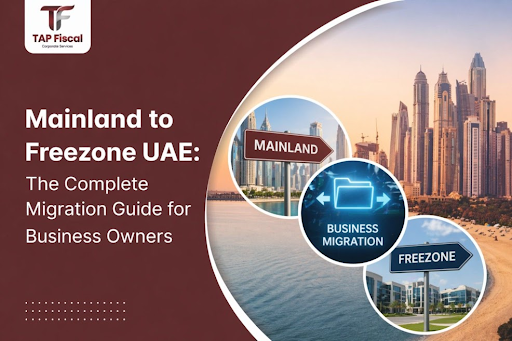
Are you thinking about making the move from mainland to freezone UAE? You are not alone. Hundreds of business owners in the UAE make this shift every year and for good reasons. Lower taxes, full foreign ownership, simpler operations, and access to global markets make freezone setups increasingly attractive.
But moving a company from the mainland to freezone is not as simple as just changing an address. It involves a structured process, careful planning, and a clear understanding of what you gain and what you give up and before you commit to a full migration, there is a critical 2025 regulatory development you need to know about. Dubai Executive Council Resolution No. 11 of 2025 now allows freezone companies to operate on the UAE mainland without creating a separate mainland entity. For many businesses, this changes the decision entirely. This guide covers everything: the reasons to switch, the new permit alternative, the qualifying criteria for the 0% tax rate, the exact migration steps, the costs, and what you keep and what you give up.
2025 regulatory update: Dubai Executive Council Resolution No. 11 of 2025 (effective 3 March 2025) now permits freezone companies to conduct mainland business activities via a branch licence or temporary permit — without forming a new mainland company. This may change whether full migration is the right choice for your business. See the full section below before deciding.
Why Are Business Owners Moving from the Mainland to the Freezone?
The UAE’s freezone ecosystem has grown dramatically. With over 45 free zones in the country, each catering to specific industries and business models, there are now more options than ever. Here is why many business owners are choosing to transfer their business to the Free Zone in the UAE:
- Corporate Tax Advantages For Qualifying Businesses
Qualifying Free Zone Persons (QFZPs) can benefit from a 0% corporate tax rate on qualifying income. For businesses that generate revenue from international clients or other free zone entities, this is a significant financial advantage over mainland operations. However, and this is critical – you must meet the QFZP qualifying criteria every year. See the full section below on what qualifying actually requires.
2. 100% Foreign Ownership
Under the mainland structure, some business activities historically required a UAE national sponsor holding 51% ownership. While recent laws have expanded 100% foreign ownership to many mainland activities, some sectors still have restrictions. Free zones have always offered 100% ownership to foreign investors – no local sponsor required.
3. Simplified Operations
Free zones offer a one-stop shop approach. License renewals, visa processing, and regulatory filings are all handled within the free zone authority. This reduces the time and cost of dealing with multiple government departments.
4. Cost Efficiency for Certain Business Types
For businesses that do not rely on walk-in customers or physical retail presence, freezones can be significantly cheaper. There is no need for a physical office in some free zones — flexi-desk and virtual office options are widely available.However, businesses that need physical mainland presence will face added costs for permits or branches under the new 2025 framework.
5. Better for Export-Oriented Businesses
If your business is focused on exports or international transactions rather than the local UAE market, a freezone setup is often more efficient. Freezones are designed to facilitate international trade.
Before You Migrate: The New Freezone Mainland Operating Permit (2025)
This is the most important section to read before committing to a full migration. In March 2025, Dubai issued a resolution that fundamentally changed the freezone-mainland boundary. For many businesses considering migration, this new permit system may be a faster, cheaper alternative to a full restructuring.
What Dubai Executive Council Resolution No. 11 of 2025 Means for You
Under this resolution, freezone companies registered in Dubai (excluding financial institutions in the DIFC) can now apply to the Department of Economy and Tourism (DET) for one of three authorisations to conduct mainland business activities:
| Permit Type | How It Works | Annual Cost (AED) | Validity |
| Mainland Branch Licence | Open a physical branch in Dubai mainland under DET supervision | 10,000 / year | 1 year, renewable |
| Remote Branch Licence | Operate mainland activities from your freezone HQ — no new office required | 10,000 / year | 1 year, renewable |
| Temporary Operating Permit | Conduct specific mainland projects or pilot activities | 5,000 / 6 months | 6 months, non-renewable in same form |
- No local sponsor or UAE national shareholder required.
- Existing freezone employees can work on mainland projects without transferring their visas.
- Separate financial records must be maintained for mainland activities.
- The permit is tied to activities already listed on your existing freezone licence.
- Companies already trading in the mainland without a permit must regularise by March 2026 or face penalties.
Does This Apply to All Free Zones in the UAE?
Resolution No. 11 of 2025 is Dubai local legislation — it applies to companies registered in Dubai free zones only (DMCC, JAFZA, IFZA, Meydan, Dubai Silicon Oasis, etc.). It does not automatically apply to free zones in Abu Dhabi, Sharjah, RAK, or other emirates. However, Abu Dhabi (ADDED) and several Northern Emirates free zones have their own dual-licence frameworks. Contact TAP Fiscal for the applicable rules in your specific free zone.
Full Migration vs Permit: Which Is Right for You?
| Factor | New Permit (Resolution 11) | Full Migration to Freezone |
| Cost | AED 5,000–10,000/year | AED 31,000–111,000+ one-off |
| Timeline | Weeks | 3–6 months |
| Keep mainland access | Yes — full mainland trading permitted | Restricted — distributor may be needed |
| New entity required | No | Yes — new freezone company |
| Freezone tax benefits (QFZP) | Depends on income split — mainland income taxed at 9% | Qualifying income taxed at 0% if QFZP criteria met |
| Best suited for | Businesses needing both mainland and freezone access | Businesses primarily serving international/freezone clients |
TAP Fiscal recommends assessing the permit option before committing to full migration. In many cases, a AED 10,000 permit achieves the business goal in weeks — not the months and tens of thousands of dirhams a full migration requires.
Is It a Good Time to Switch to Freezone in UAE?
Many business owners ask, “Is it good time to switch to a free zone?” The honest answer is: it depends on your business model, your tax position, and your client base.
It makes sense to switch if:
- Most of your revenue comes from outside the UAE or from other freezones
- You want to reduce your corporate tax obligations legally
- You do not need to trade directly with UAE mainland customers
- You want to simplify your regulatory burden
- You are in a sector that thrives in a specific freezone ecosystem (e.g., tech in Dubai Internet City, media in twofour54)
It may not be the right time if:
- • Your main customers are mainland UAE businesses — consider the Resolution 11 permit instead.
- Your business requires a physical retail or commercial presence in the UAE market
- You cannot meet the substance requirements for QFZP status — the 0% rate will not apply.
- You operate in a sector not permitted in your target free zone
- You have long-term contracts or obligations tied to your mainland license
QFZP Qualifying Criteria: What You Must Meet to Get the 0% Tax Rate
This is the section most migration guides skip and the one that causes the most expensive surprises. Qualifying Free Zone Person (QFZP) status is not automatic for every freezone company. You must actively meet all of the following criteria every year to benefit from the 0% corporate tax rate on qualifying income.
The Five Core Requirements
- Adequate substance in the UAE: Your business must have real employees, genuine management decision-making, and physical presence (or valid use of freezone facilities) in the UAE. A shell company or a company where all decisions are made overseas will not qualify.
- Qualifying income only: The 0% rate applies exclusively to qualifying income — broadly, income from transactions with other freezone persons or from international sources. Income earned from mainland UAE customers is taxed at the standard 9% rate regardless of QFZP status.
- No election to be taxed under the standard regime: A QFZP must not have elected to apply the standard corporate tax regime. Once elected, this cannot easily be reversed.
- Annual compliance filings: Even as a QFZP, you must register for corporate tax, file an annual return, and maintain full financial records for 7 years.
- No disqualifying revenue threshold exceeded: If more than a de minimis amount of your income comes from non-qualifying sources (mainland clients, domestic transactions), your entire income may lose the 0% treatment for that year.
Many businesses migrate to a freezone expecting the 0% corporate tax rate, fail the substance or qualifying income test, and end up taxed at 9%, with all the operational restrictions of a freezone and none of the expected tax savings. Always obtain a formal QFZP assessment from a registered UAE tax advisor before migrating for tax reasons.
TAP Fiscal’s corporate tax team provides QFZP eligibility assessments as part of our pre-migration advisory service — giving you a clear answer before you invest in a restructuring
Mainland to Freezone UAE: Can You Actually Transfer a License?
No. A direct licence transfer is not possible. Mainland licences are issued by the Department of Economic Development (DED) and freezone licences by the respective free zone authority — they operate under separate legal frameworks with no transfer mechanism between them.
So when we talk about mainland to free zone migration in the UAE, what actually happens is:
- You set up a new company in the freezone of your choice
- You run both entities in parallel during a transition period (optional)
- You wind down and close the mainland company once the migration is complete
This means mainland to freezone migration UAE is really a business restructuring exercise, not a simple license transfer.
How to Transfer UAE Mainland License to a Freezone: Step-by-Step
- Evaluate your business activity: Confirm your business activity is permitted in your target free zone. Not all activities are available in all free zones.
- Choose the right free zone: Research which free zone best suits your industry, budget, visa quota needs, and operational requirements. Use the freezone comparison table below as a starting point. Compare setup costs, annual licence fees, visa quotas, available facilities, and critically, whether the free zone is covered by Dubai Resolution 11 of 2025 for future mainland access.
- Incorporate the freezone company: Register your new entity with the chosen free zone authority. This includes selecting a company name, submitting shareholder documents, and paying setup fees.
- Obtain the freezone trade license: Once approved, the free zone authority issues your new trade license.
- Register for Corporate Tax: Once your freezone trade licence is issued, you must register the new freezone entity for Corporate Tax on the FTA’s EmaraTax portal within 3 months of the date of incorporation. Missing this deadline attracts an immediate AED 10,000 penalty.
There are four important points to address at this stage:
- First, make your QFZP election deliberately. The decision to be treated as a Qualifying Free Zone Person and access the 0% corporate tax rate on qualifying income, is made at the point of corporate tax registration. If you elect the standard 9% regime by default or in error, reversing it later is complex and not always possible. Get tax advice before completing this step.
- Second, do not cancel the mainland entity’s Corporate Tax registration yet. During the parallel operation period, both entities carry active CT obligations. The mainland company must continue filing returns and meeting its CT deadlines until it is formally closed. Stopping trading does not end the CT obligation, only formal FTA deregistration does.
- Third, keep both entities’ CT records clean throughout the transition. Any gap or missed filing on either entity during the overlap period will result in late filing penalties of AED 500 per month, regardless of whether tax is owed.
- Fourth, plan for the mainland entity’s final Corporate Tax return. Once the mainland company is wound down, a final CT return must be filed covering the period up to the date of cessation, and a CT deregistration application submitted to the FTA within 3 months of that date.
- Open a freezone corporate bank account: Apply for a business bank account under the new freezone entity. This can take 2–6 weeks depending on the bank.
- Transfer clients, contracts, and operations: Begin migrating your clients, contracts, and day-to-day operations to the new freezone entity. Update your invoicing, agreements, and communications.
- Contract Novation — What It Means and How It Works: Novation is the legal process of transferring a contract from one party (your mainland entity) to another (your new freezone entity) with the full agreement of the counterparty. It is not the same as assignment, novation requires the consent of all three parties: you, the counterparty, and the new entity.
- Every commercial contract signed under your mainland entity: client agreements, supplier contracts, leases, distributor agreements, must be novated to the freezone entity before the mainland company is closed.
- If a counterparty refuses to consent to novation, the contract remains with the mainland entity, which must continue to exist until the contract expires or is terminated.
- Government contracts and public sector tenders often cannot be novated to a freezone entity, they typically require a mainland licence. These contracts must run their course or be terminated before migration is complete.
- A UAE-qualified business lawyer should handle novation agreements to ensure there are no gaps in your contractual obligations or unintended termination triggers.
Do not close the mainland company until every contract has been successfully novated or has expired. Premature closure with active contracts creates legal exposure and can result in breach of contract claims.
- Handle employee visas: Cancel visas under the mainland company and transfer or reapply for visas under the freezone entity.
- Close the mainland company: Once your operations are fully running under the freezone license, begin the formal mainland company closure process with the DED.
- Notify the FTA and update your VAT Registration: Inform the FTA of the structural change and update your VAT registration details accordingly.
Freezone Comparison: Which Free Zone Is Right for Your Business?
Not all free zones are created equal. The right choice depends on your industry, visa needs, budget, and whether you need mainland access. The table below covers eight of the most popular options in 2026.
| Free Zone | Best For | Setup Cost (AED) | Visa Quota | Resolution 11 Applies? | Notes |
| DMCC | Commodities, trading, fintech | 18,000–35,000 | Flexible | Yes (Dubai) | Most prestigious; strong banking reputation |
| JAFZA | Logistics, manufacturing, import/export | 15,000–40,000 | Flexible | Yes (Dubai) | Proximity to Jebel Ali Port; ideal for goods-based businesses |
| IFZA | Professional services, consulting, tech | 12,000–15,000 | Up to 6 | Yes (Dubai) | Cost-effective; popular with SMEs and sole traders |
| Meydan | E-commerce, sports, events, media | 12,000–16,000 | Up to 6 | Yes (Dubai) | Flexible activities list; low setup cost |
| DIFC | Finance, legal, professional services | 30,000+ | Flexible | No (DIFC exempt from Res. 11) | Common law jurisdiction; premium positioning |
| RAKEZ | Manufacturing, education, media | 6,000–14,000 | Flexible | Separate RAK rules apply | Very cost-effective; good visa quota |
| Shams (Sharjah) | Media, publishing, freelancers | 5,500–12,000 | Up to 3 | Separate Sharjah rules | Budget-friendly; good for solo operators |
| Ajman Free Zone | Trading, manufacturing, services | 5,500–10,000 | Up to 6 | Separate Ajman rules | Cheapest UAE freezone option; northern UAE location |
TAP Fiscal has direct relationships with all major UAE free zones and can negotiate competitive setup packages. Contact us for a free zone recommendation tailored to your specific business activity and growth plans.
Mainland to Freezone Migration in UAE: Costs to Expect
| Cost Component | Estimated Cost (AED) | Notes |
| Freezone company setup fee | 8,000 – 25,000 | Varies widely by free zone |
| Freezone trade license (annual) | 6,000 – 20,000 | Depends on activity and free zone |
| Office / flexi-desk fee | 3,000 – 15,000/year | Virtual office is cheapest option |
| Visa transfer (per visa) | 4,000 – 6,000 | Includes cancellation + new application |
| Bank account opening | 0 – 2,000 | Some banks charge a fee |
| Mainland company closure | 10,000 – 35,000 | Full liquidation cost |
| Legal / consultancy fees | 3,000 – 10,000 | Recommended for smooth migration |
| Total (Estimate) | 31,000 – 111,000+ | Varies by company size and complexity |
Note: Costs are estimates as of 2025. Always request a detailed quote from your chosen free zone and a licensed business consultant before committing.
Moving Company from Mainland to Freezone: What You Keep and What You Lose
What You Keep
- Your business activity and brand (under the new entity)
- Your team (with visa transfers to the freezone)
- Your client relationships (with updated contracts)
- Full foreign ownership rights (if not already available under mainland)
- Potential 0% corporate tax on qualifying income — if you meet the QFZP criteria.
- Mainland access – via Dubai Resolution 11 permit if you are in a Dubai freezone.
What You Give Up
- Your existing mainland trade licence and the company’s registration history under that entity.
- Automatic, unrestricted mainland market access – replaced by the permit system (for Dubai freezones) or distributor/agent requirements (for other emirates).
- The ability to open physical retail branches anywhere in the UAE without additional permits.
- Any government contracts that require a mainland license
Common Mistakes When Transferring Business to Freezone UAE
- Not checking whether your business activity is permitted in the target free zone before starting.
- Closing the mainland company too early, before the freezone entity is fully operational and all contracts are novated.
- Assuming QFZP status and the 0% tax rate will apply automatically, it requires a formal eligibility assessment.
- Forgetting to update existing contracts, supplier agreements, and client invoices to reflect the new entity.
- Ignoring VAT implications, the FTA must be informed of any structural change and the new entity needs its own VAT registration.
- Underestimating the timeline, the full migration from freezone setup to mainland closure typically takes 3–6 months.
- Choosing a free zone based on price alone without considering visa quotas, permitted activities, banking ease, and mainland access rules.
- Not considering the Resolution 11 permit first, for many businesses, a AED 10,000 permit achieves the goal without a full restructuring.
- Failing to obtain a QFZP assessment from a tax advisor before migrating for tax reasons.
Tips for a Smooth Mainland to Freezone Migration UAE
- Run both entities in parallel for at least 1–2 months before closing the mainland company
- Get a detailed comparison of 3–4 free zones before committing — setup costs and conditions vary significantly
- Consult a corporate tax advisor before switching — ensure you actually qualify for freezone tax benefits
- Plan your visa transfers carefully — employees should not be left without valid status during the transition
- Update all business materials: website, invoices, email signatures, and legal documents as soon as the new license is issued
- Inform your bank early — account transitions can take longer than expected
Move to a UAE free zone with TAP Fiscal today
Making the move from the mainland to a free zone in the UAE is a significant business decision, one that can unlock real financial and operational benefits if done correctly. Whether it is the tax advantages, full ownership rights, or simplified processes that are drawing you in, the key is to plan the migration carefully. With expert guidance from TAP Fiscal, you can assess the right structure and avoid costly mistakes from day one.
The process of moving your company from the mainland to the free zone is not just paperwork; it is a full business restructuring. You need to set up a new entity, migrate your operations, transfer your team, update your contracts, and then wind down the mainland company in the right sequence. TAP Fiscal supports businesses at every stage, from setup to final transition, so nothing is missed.
Done right, mainland to free zone migration in the UAE puts your business in a stronger position for growth. Done wrong, it can cause operational gaps, financial penalties, and legal complications.
Thinking about making the switch? TAP fiscal expert team specializes in mainland to free zone migration across all major UAE free zones. Contact us today for a free assessment and find out exactly which free zone is the best fit for your business, and how to get there without a single missed step.TAP’s fiscal expert team specialises.
BOOK FREE CONSULTATION With TAP Fiscal
Call: +971502890630
WhatsApp: +971502890630
Email: Aina.k@tapfiscal.com
ALSO READ : Business Setup in Dubai: A Complete Guide Step by Step
Frequently Asked Questions (FAQs)
Q1. Can I directly transfer my mainland license to a freezone in UAE?
No. A direct license transfer is not possible. Mainland licenses are issued by the DED and freezone licenses by free zone authorities — they operate under separate legal frameworks. The correct approach is to set up a new freezone company and then close the mainland entity.
Q2. How long does mainland to freezone migration UAE take?
The full process — from freezone company setup to mainland closure — typically takes 3 to 6 months. The freezone registration itself can be done in 2–4 weeks, but operational migration, visa transfers, and mainland closure add to the timeline.
Q3. Is it a good time to switch to freezone in UAE in 2025–2026?
For businesses focused on international trade or those that genuinely qualify for the 0% corporate tax rate as a QFZP, it can be an excellent time to switch. However, you should now consider the Resolution 11 permit first, it may give you freezone benefits while retaining mainland access without a full restructuring. Always obtain a QFZP eligibility assessment before migrating for tax reasons.
Q4. Will I lose my UAE residency visa when migrating to a freezone?
Your residency visa is tied to your current mainland company. During migration, you will need to cancel your mainland visa and apply for a new one under the freezone entity. Plan this carefully to ensure no lapse in your visa status.
Q5. Can a freezone company trade directly with mainland UAE businesses?
Yes, but with limitations. A freezone company can sell goods and services to mainland UAE businesses, but it may need to appoint a local distributor or commercial agent for certain activities. For services and professional work, invoicing mainland clients directly is generally permitted.
Q6. What is the cheapest free zone to set up a company in UAE?
Some of the more affordable options include Ajman Free Zone, IFZA (International Free Zone Authority), and Sharjah Media City (Shams). Setup costs can start from around AED 8,000–12,000 annually. However, the cheapest option is not always the best – consider visa quotas, activities permitted, and banking ease.
Q7. Do I need to close my mainland company before setting up in a freezone?
No. You can set up the freezone company first and run both entities in parallel during the transition period. This approach is recommended — it ensures your business operations continue without interruption while you migrate clients, contracts, and staff.
Q8. How does mainland to freezone migration affect my VAT registration?
The new freezone company is a separate legal entity requiring its own VAT registration if it meets the mandatory threshold (AED 375,000 taxable turnover) or voluntarily registers above AED 187,500. You must also inform the FTA when you close the mainland entity and formally deregister its VAT. Failing to update VAT records on both entities can result in ongoing filing obligations and penalties.
Q8A. How does mainland to freezone migration affect my Corporate Tax registration?
The new freezone company is a separate legal entity and must be registered for Corporate Tax with the FTA within 3 months of its incorporation date — regardless of its income level or whether it owes any tax. There is no threshold for Corporate Tax registration; it is mandatory for all UAE companies within scope.
Q9. Can I keep the same company name when moving from mainland to freezone UAE?
You can apply for the same or a similar trade name in the free zone, but approval is subject to availability and the free zone’s naming rules. It is not guaranteed, especially if the name is common or similar to an existing registered entity.
Q10. What happens to my existing mainland contracts when I migrate to a freezone?
Your existing contracts were signed under your mainland entity. When you migrate, you will need to novate (reassign) those contracts to the new freezone company with the agreement of the other party. This is a legal process — a business lawyer or consultant should handle it to ensure there are no gaps in your contractual obligations.
Q11. Does Dubai Resolution No. 11 of 2025 apply to all UAE free zones?
No. Dubai Executive Council Resolution No. 11 of 2025 applies only to free zone companies registered in Dubai (excluding DIFC financial institutions). Free zone companies registered in Abu Dhabi, Sharjah, Ras Al Khaimah, Ajman, Fujairah, or Umm Al Quwain are not covered by this resolution. However, Abu Dhabi (ADDED) and several Northern Emirates free zones have their own dual-licence frameworks — contact TAP Fiscal for the applicable rules in your specific emirate and free zone.
Q12. What are the QFZP substance requirements in practice?
To qualify as a Qualifying Free Zone Person and access the 0% corporate tax rate, your business must have adequate economic substance in the UAE. In practice, this means: genuine employees based in the UAE (not just paper employees), real management decisions made from within the UAE, use of actual freezone facilities rather than just a registered address, and the majority of your income derived from qualifying sources (other freezone persons or international transactions). A formal substance assessment by a UAE tax advisor is the only reliable way to determine whether you meet the threshold.
Q13. Can I keep my mainland bank account after migrating to a freezone?
Your mainland bank account is held in the name of your mainland company. Once the mainland company is formally closed and deregistered, the account must also be closed and a clearance letter obtained from the bank. During the transition period, when both entities operate in parallel, you can maintain both accounts. Open your freezone bank account as early in the process as possible — account opening can take 2–6 weeks and is often the longest single step in the migration.
Q14. What happens to government contracts during migration?
Government and public sector contracts in the UAE almost always require a mainland trade licence as a condition of the contract. These contracts cannot typically be novated to a freezone entity. If you have active government contracts, you cannot fully close your mainland company until those contracts expire, are completed, or are formally terminated by agreement. Plan your migration timeline around your government contract expiry dates.
Q15. Can I reverse a freezone migration and go back to the mainland?
Yes — but it is not a reversal; it is a new registration. If you decide a mainland structure is better after migrating to a freezone, you would need to incorporate a new mainland company with the DED, migrate your operations back, and close or retain the freezone entity depending on your plans. There is no mechanism to ‘transfer’ a freezone licence back to the mainland either. This is why TAP Fiscal strongly recommends a thorough pre-migration assessment — including the Resolution 11 permit option — before committing to a full restructuring.